 In this area
The Beijing issue
798 Art District, Beijing: Factory Bones, Gallery Light
Beijing’s best-known art district is still a working industrial shell at heart — a place where Bauhaus sheds, Mao-era slogans and serious contemporary galleries share the same weathered rooflines.
By Zhao MeilinReading Beijing's living history
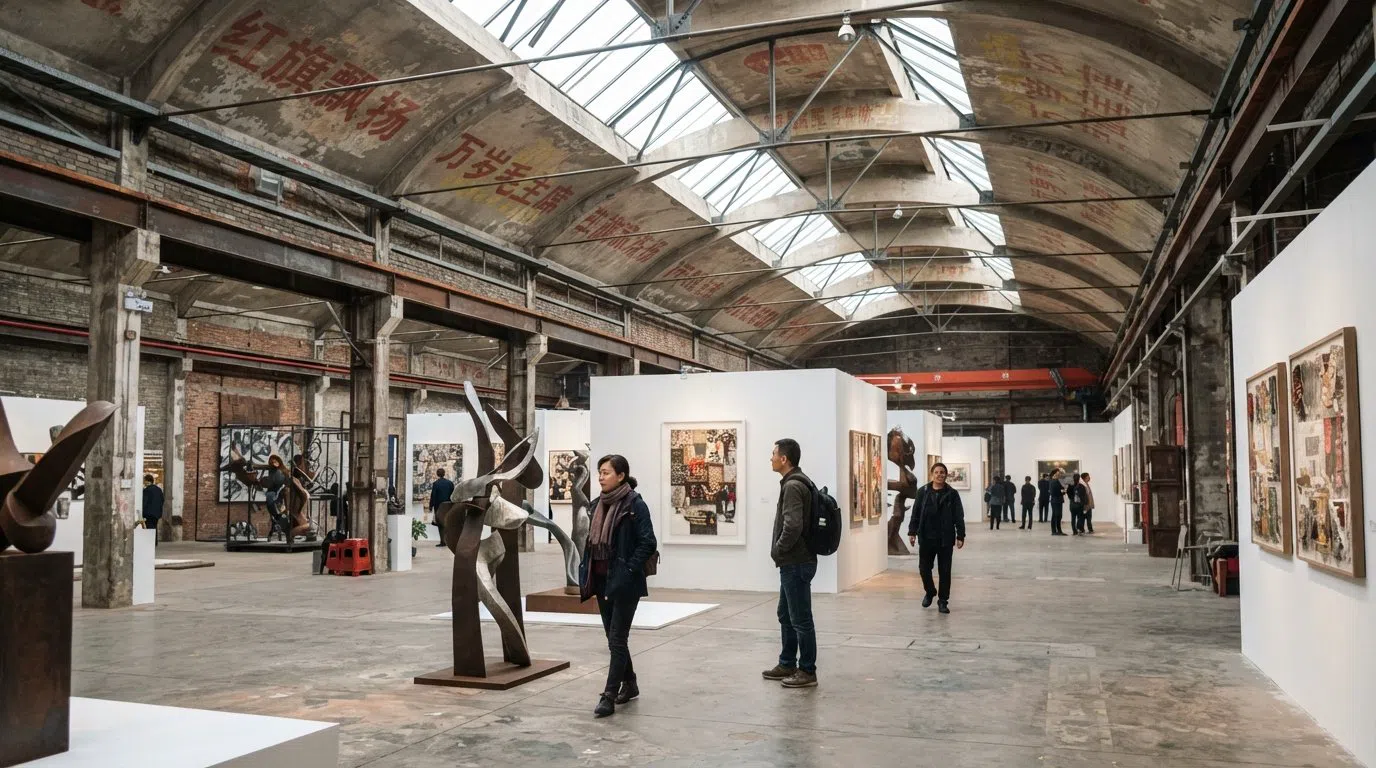
The first thing you notice in 798 is not a painting. It is the building itself: a long brick shed with a sawtooth roof, the kind of roof that was designed to pull in north light and spare factory workers the glare. Then, almost before you have properly looked up, you catch the red slogans still painted across the arched concrete ceiling — not restored away, but left there on purpose, so that a Pipilotti Rist video can flicker beneath a fifty-year-old command to serve the people. That is 798 in one glance: a former electronics plant that never quite stopped being a factory, only changed the thing it manufactures. Today it turns out gallery openings, coffee, craft beer, design objects and the occasional queue of visitors with cameras already raised.
What 798 is known for
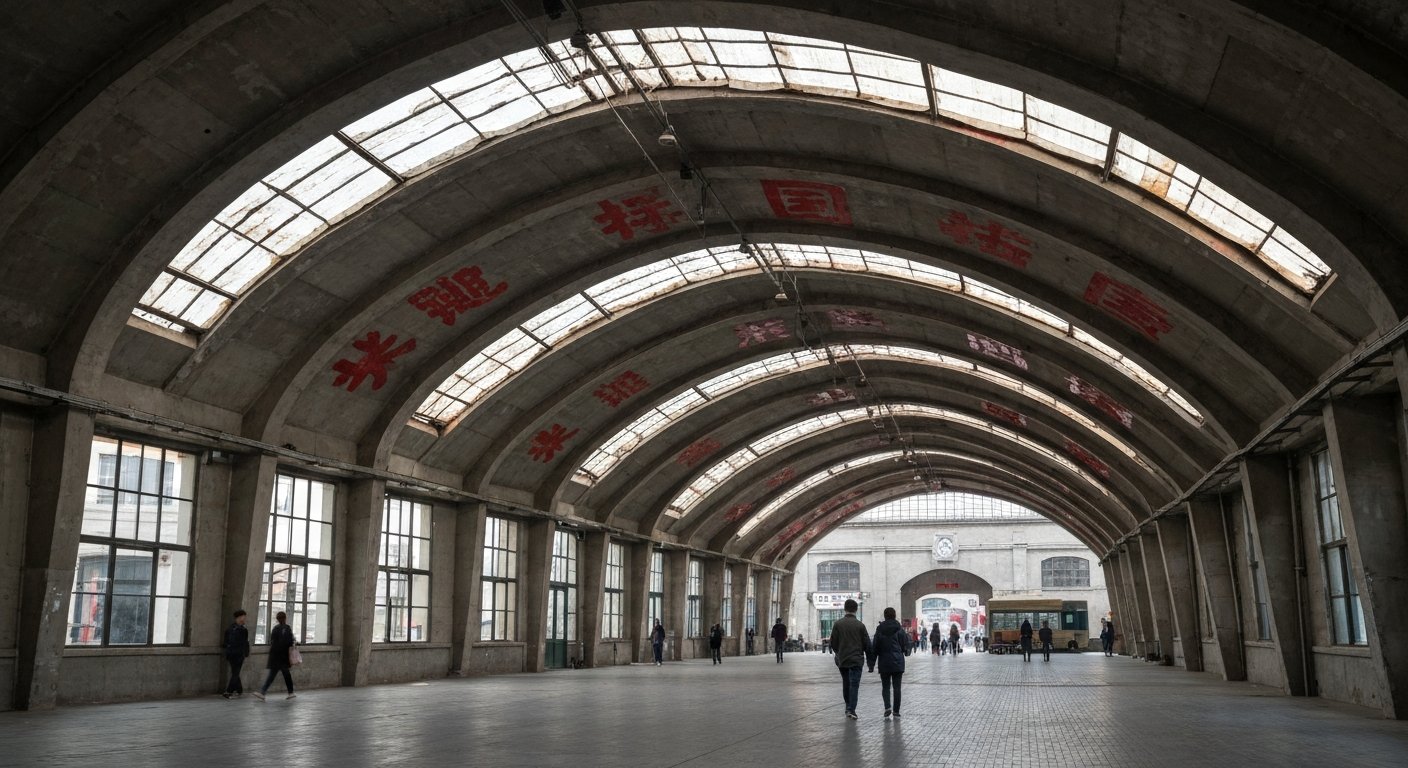
798 began life in 1954 as the 718 Joint Factory, a Sino-East-German project to build a state electronics plant for military and aerospace components. Production started in 1957. The East German architects brought a Bauhaus logic to the place — form following function, no decorative nonsense — and the result still reads clearly in the bones of the district: sawtooth roofs with north-facing clerestory windows, arched concrete ceilings, and sheds that were made for workbenches rather than white-cube reverie. When the state sector declined in the 1980s and 90s, the numbered sub-factories — 706, 707, 718, 751, 797 and 798, the largest of them all — wound down and emptied out. The artists moved in around 2002, when Beijing’s Central Academy of Fine Arts already had studios nearby and figures such as Sui Jianguo and Huang Rui took cheap factory space. The red Maoist slogans were preserved at the artists’ request, and that detail matters: 798 is not a sterilised arts park pretending to have history. It is history, with a curator.
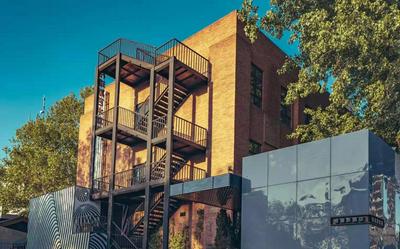
Walk the lanes and the district keeps reminding you that architecture is the main exhibition. The grid of brick sheds, narrow alleys, rusting pipes and disused rail track gives every turn a bit of theatre. Public sculpture appears where a loading bay used to be. A mural breaks up a blank wall. Sui Jianguo’s outdoor sculpture is one of the district’s signatures, but there are dozens of such interruptions, the sort of works that make you slow down without making a scene about it. On a weekday the place has an almost workmanlike calm; on a Saturday afternoon the same lanes fill with art students, design-agency staff on lunch break, couples posing against the industrial backdrop and tour groups funnelling toward UCCA. It is Beijing’s SoHo in the plainest sense: creative, polished, self-aware, and more commercial than the raw 2000s version, but still unmistakably itself.
The district is overwhelmingly a daytime place. Galleries tend to shutter around six, and by nine the lanes are quiet enough to hear a delivery cart clattering over cobbles. That is not a flaw; it is the district’s character. 798 is not trying to be a nightlife neighbourhood. It is a working art quarter that happens to be built from factory bones.
Plan your Beijing trip
Live prices from our booking partners.
Guests & rooms
Free cancellation on many rooms. We may earn a commission when you book.
Where to eat & drink
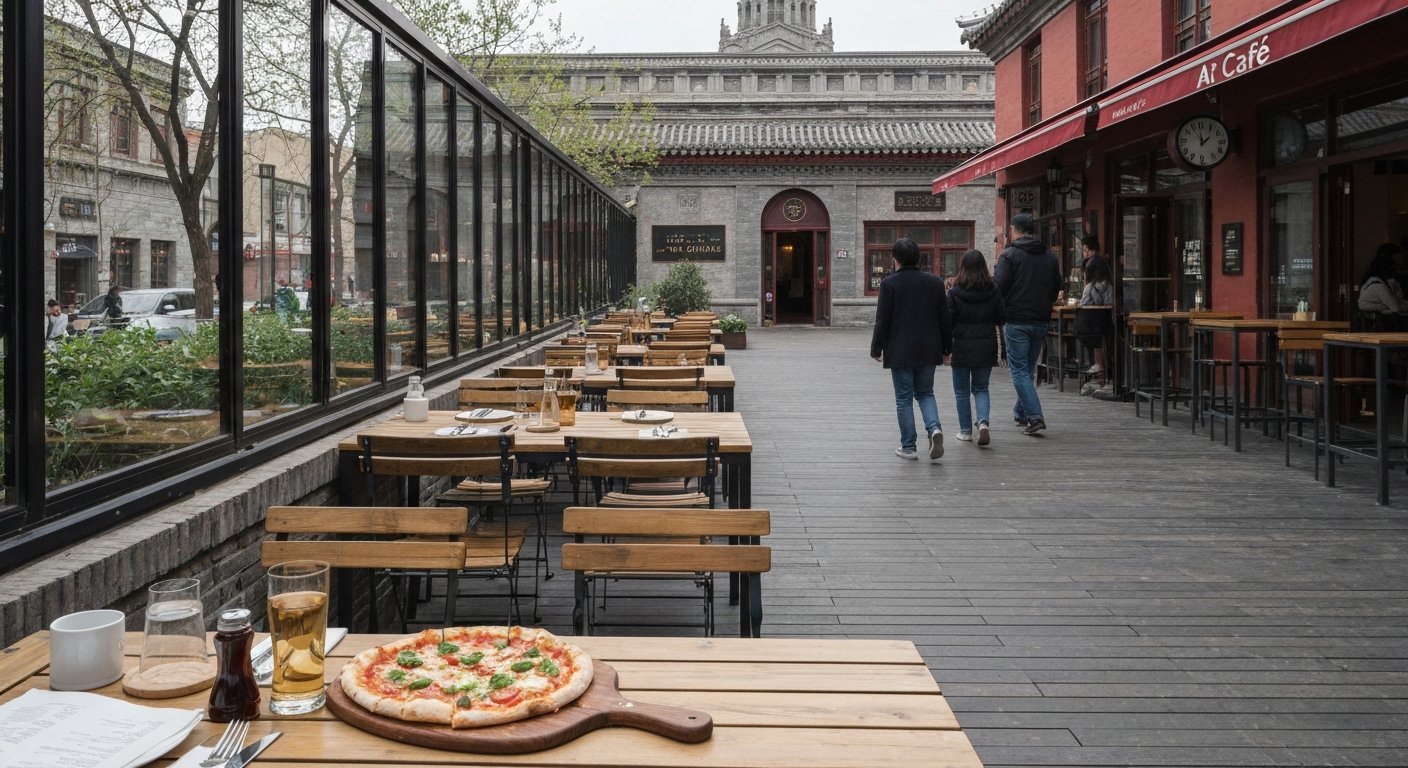
The food and drink scene here grew the sensible way: first coffee, then lunch, then beer, then enough of all three that you can spend an entire day without leaving the complex. The old guard is At Café, opened in 2003 by Huang Rui as the first art-themed café in 798. It still feels like a useful anchor, not a concept. The room is light-filled, the terrace is genuinely helpful on a good day, and the kitchen does Italian food and wood-fired pizza from an oven built with imported volcanic stone. That is the sort of detail I trust here: a café that understands the district is not a museum annex but a place where people need to sit down between galleries.
The newer arrivals show how far the district has travelled from its squatter years. Commune Reserve opened at the end of 2024 in the Wanhong Slow Life Zone and does the kind of food that keeps people lingering: pizzas, burgers and an oxtail grilled cheese, with late hours by 798 standards. It is one of those places that reminds you the district now feeds not only artists but everyone who has come to look at them. For coffee, Voyage Coffee is the most characterful stop: half specialty roaster, half bicycle workshop, an odd pairing that somehow makes perfect sense in a neighbourhood where utility and style have always lived in the same room. It is long rated among the district’s best espresso, and it tastes like a place that takes its beans seriously without forgetting it is in a former factory.
Greybox Coffee is the more polished, chain-backed answer, near the UCCA end and useful when you want cold brew or ice-drip without thinking too hard about it. Then there is Jing-A Taproom at D-06 on No. 2 Jiuxianqiao Road, which is the district’s craft-beer heartbeat: 24 rotating taps of Beijing’s best-known craft brewer, a rooftop, DJ decks, and even a beer vending machine for the gallery-hopping crowd. It is the place to mark the end of a long walk, especially when the light starts to go low across the sheds.
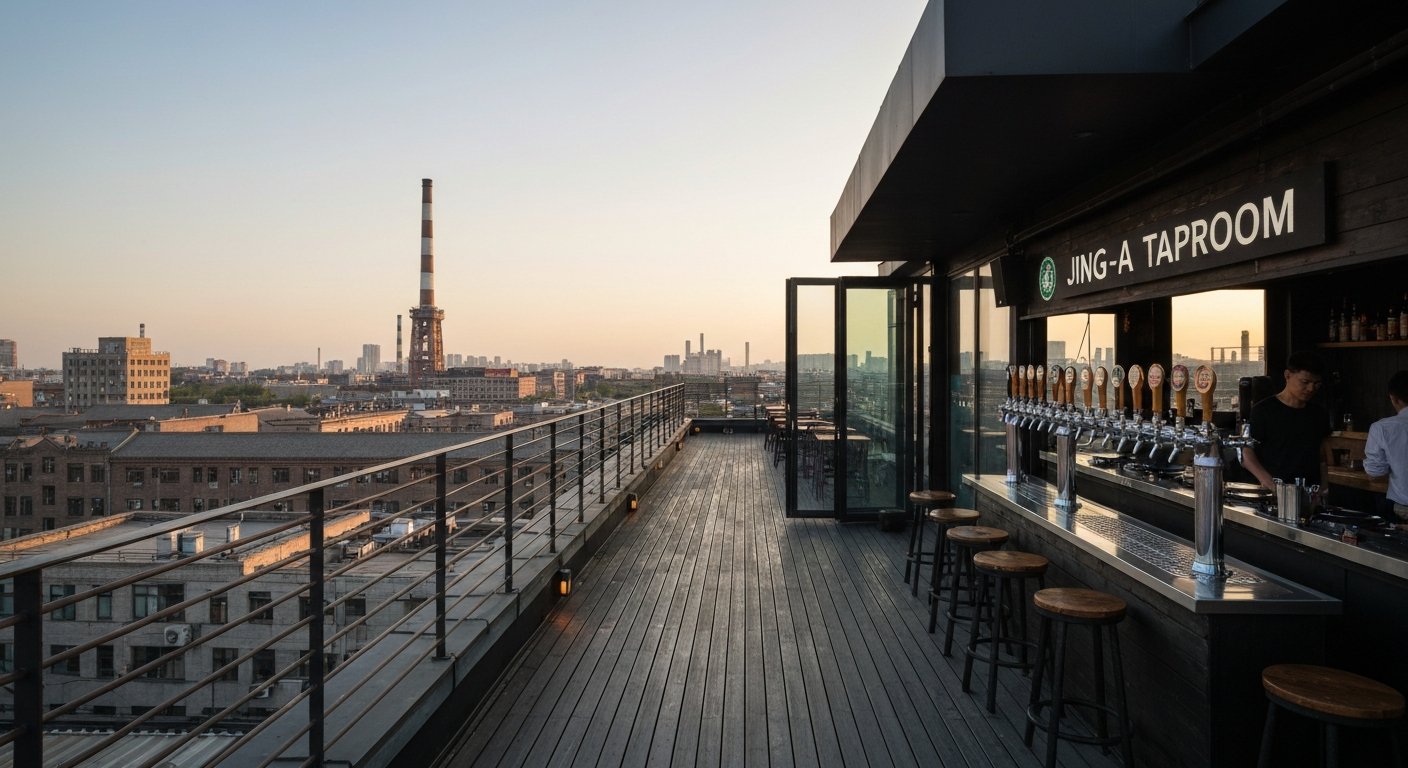
Across the wider complex, the choice is broader than it first appears. Chinese, Japanese, Korean and French kitchens occupy converted sheds, and that matters because 798 is not a one-note destination. You can begin with a coffee, pause for a pizza, and end with a beer without ever straying from the lanes. That is the practical luxury of the district: it lets you stay inside the mood of the place.
Going out
Be honest about 798 after dark. This is not where you come for a late club night. It is a daytime district, and once the galleries close the atmosphere thins quickly. If you want Beijing nightlife in the conventional sense — cocktail dens, live music, clubs — you go back to Sanlitun or the Gulou hutongs. 798 instead offers a softer kind of evening: a rooftop pint, a gallery opening, a one-off DJ set, a crowd still talking art rather than shouting over bass.
Jing-A Taproom is the standout because it understands the assignment. Its rooftop, with DJ decks and open ceilings, is the closest thing 798 has to a proper going-out spot, and it stays open later than almost anything else in the district, roughly late into the evening from around 11am. That long arc is useful. You can arrive for lunch, drift through galleries, and still be there when the light becomes that thin Beijing gold that makes even a steel railing look considered.
Commune Reserve also holds a crowd after dark, helped by its drinks as much as by the kitchen. Beyond that, the district’s after-hours life is episodic — opening nights, art festivals, the occasional event space that wakes up for a specific crowd and then goes quiet again. I rather like that restraint. 798 does not pretend to be something it is not. It gives you a working neighbourhood with a few excellent places to sit down at the end of the day.
Things to do and what to see
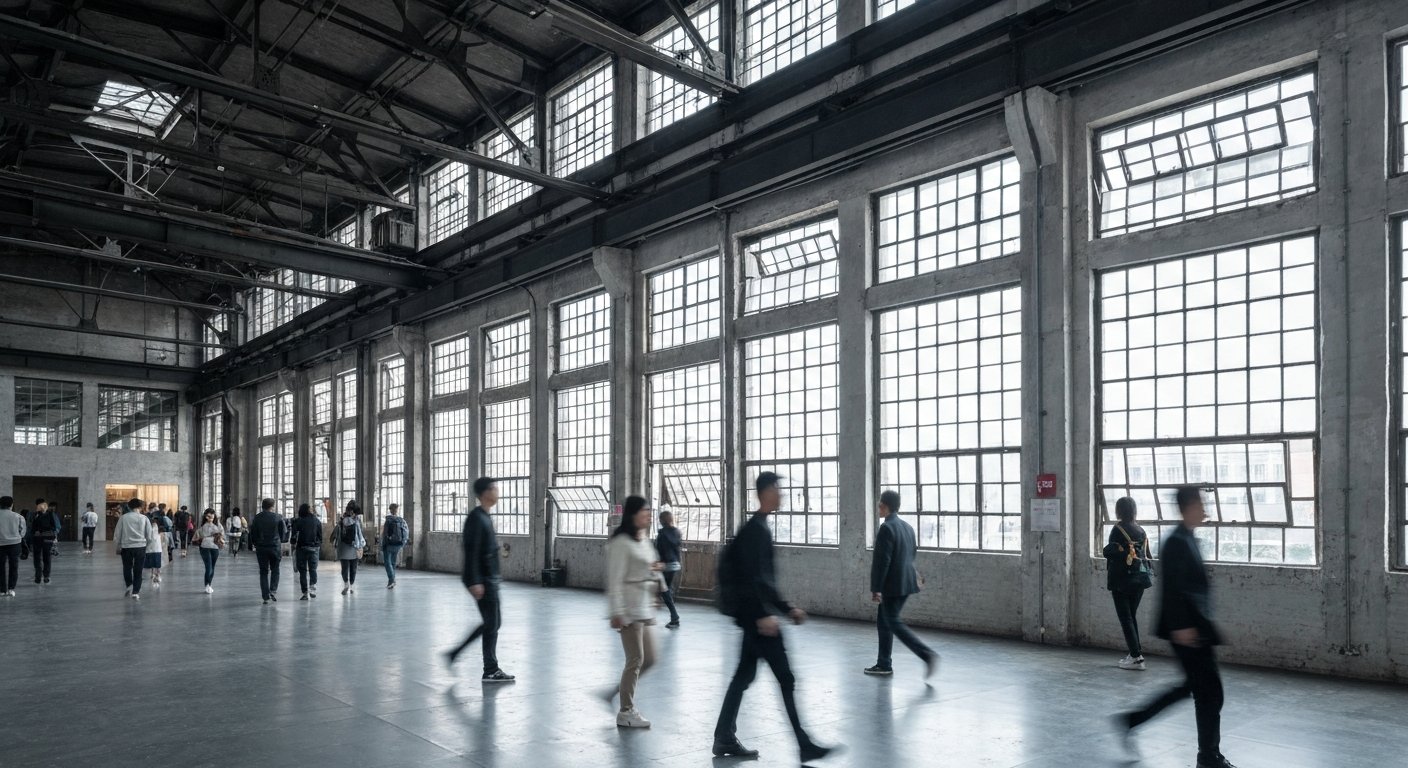
The reason to come is the galleries, and the anchor is UCCA Center for Contemporary Art, Beijing’s flagship contemporary institution, housed in a 1957 hall reworked by OMA in 2019. It is a serious place, not a token stop. Recent Beijing seasons have included major presentations by artists such as Anicka Yi and Pipilotti Rist, and the institution draws over a million visitors a year across its network and programmes. UCCA opens Tuesday to Sunday from 10:00 to 19:00, with last entry at 18:30, and ticket prices vary by exhibition. Buy at the desk or via WeChat, then give yourself time; this is the sort of place where a single show can consume a morning.
Around UCCA sits the district’s densest cluster of serious contemporary art. Galleria Continua, at #8503, 2 Jiuxianqiao Road, has been in Beijing for two decades and still stages ambitious multi-floor shows. Beijing Commune, founded in 2004, remains a leading gallery for influential contemporary Chinese artists. Hive Center for Contemporary Art, in Building E06, spreads across five galleries in a converted plant and mounts about a dozen shows a year. Tang Contemporary Art runs large pan-Asian contemporary presentations across its 798 spaces. If you want the district at its most convincing, do not rush these rooms. They are why people come.
For a more splashy, ticketed experience, the Meet You Museum sits beside UCCA in a 5,500-square-metre space and stages digital-art and blockbuster travelling exhibitions. It has hosted shows tied to Raphael, Monet, Picasso and Ancient Egyptian material. That sort of programming can feel broad-brush in lesser hands, but here it adds to the district’s range. 798 is not only for the hard-core contemporary crowd; it also knows how to draw the curious.
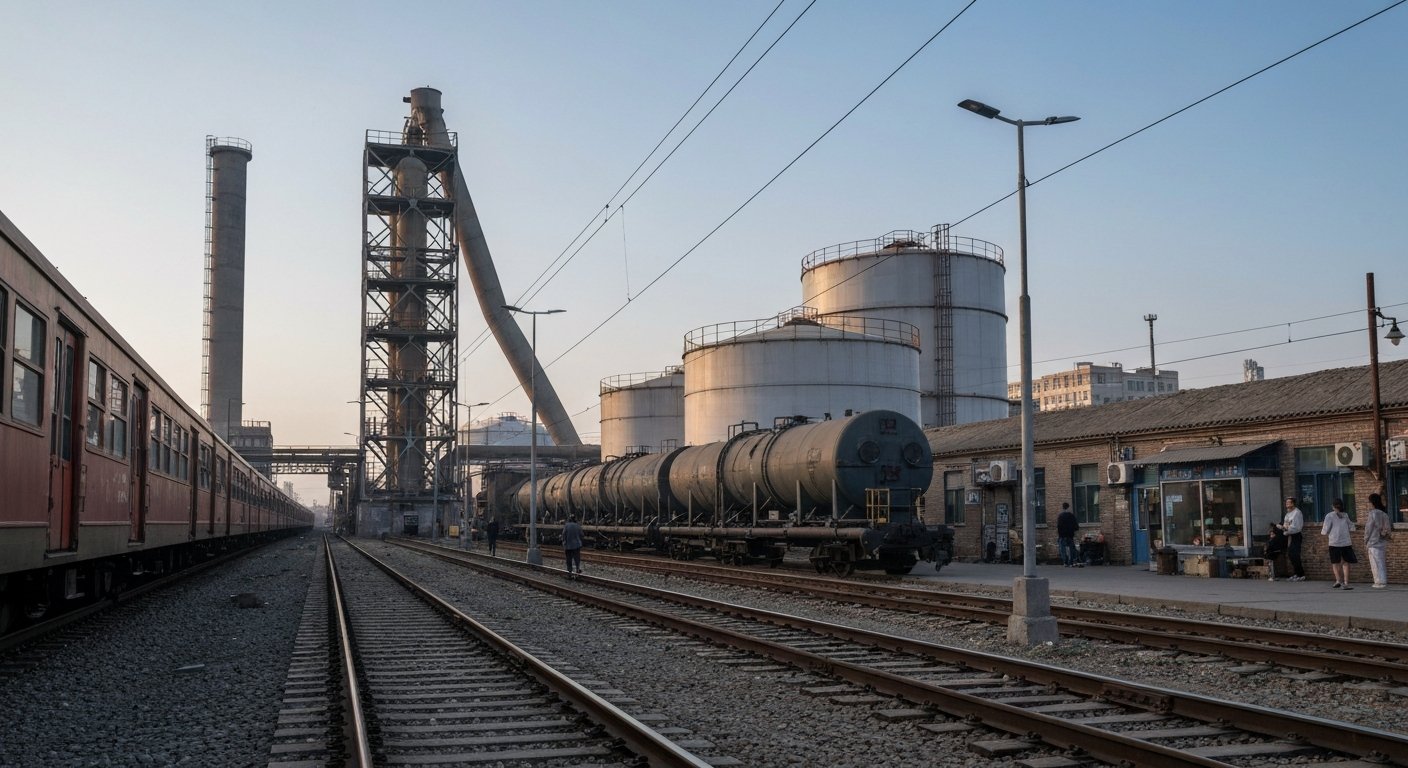
Between the buildings, keep your eyes on the ground and the walls. The preserved Maoist slogans are still one of the district’s defining features, and the public sculpture and murals are not decorative afterthoughts so much as part of the district’s daily texture. Then walk into the adjacent 751 D·Park, the former gas-works turned design zone, where the old railway, desulfurisation tower and two gas tanks create the district’s best photo backdrop. It is the sort of industrial scene Beijing does very well when it allows itself to be plain.
Don’t miss in 798 Art District
The industrial-chic Bauhaus architecture of the factory halls, complete with red revolutionary slogans.
The world-class contemporary art exhibitions at the UCCA Center for Contemporary Art.
Shopping
Shopping in 798 is not about hauling bags home. It is browsing, collecting, pausing. The district is full of independent design studios, small concept shops, ceramics and jewellery stalls, and, above all, art bookshops and gallery stores. The UCCA Store, branded Badmarket UCCA with an associated book gallery, is the reliable place to pick up well-produced art books, exhibition catalogues, prints and design objects. Most of the larger galleries run their own shops too, and those are worth a look if you care about editions and monographs more than souvenirs.
The bookshop tradition here runs deep. Robert Bernell opened Timezone 8, a bookshop, gallery and publishing house, in a former factory canteen in the district’s early days, and 798 has kept its reputation as a place to find Chinese contemporary-art titles you will not easily see elsewhere. That matters in a city where many shopping districts are built on noise and novelty. Here the retail is quieter, more considered, and often more useful in the long run.
Along the lanes you will also find small vendors selling trinkets, jewellery, postcards, prints and snacks, plus the odd mobile ice-cream cart. It is a modest commerce, but that suits the district. If you want serious design retail, step into 751 D·Park, where fashion buyers’ shops, furniture and product studios, and regular design showcases extend the browsing beyond the art district proper. The best souvenir here is not a logoed tote. It is a photobook, a print, a piece of studio ceramic — something with a little weight to it.
Where to stay in 798
There is almost nowhere to sleep inside 798 itself, and that is worth saying plainly. This is a factory-turned-culture zone, not a hotel district. Treat it as somewhere you visit rather than base yourself. The practical move is to stay in the surrounding Chaoyang District and travel in. Wangjing, immediately to the northeast, is the closest residential-and-business quarter and is well stocked with mid-range and business hotels. Sanlitun and the CBD, both a taxi or metro hop south, give you more evening life, dining and shopping, with 798 an easy daytime excursion.
Wherever you land in Chaoyang, you are rarely more than 15 to 25 minutes from the district by car. If imperial Beijing is your priority, you may prefer a hutong base near Gulou and accept the longer trip out here. If the contemporary-art and business side of the city matters more, Wangjing or Sanlitun keeps 798 comfortably within reach.
Hotels in 798 Art District
Our best-rated stays in this neighbourhood. Prices are approximate “from” rates — confirmed at the provider when you continue. We may earn a commission if you book through our partners — at no extra cost to you.
In this area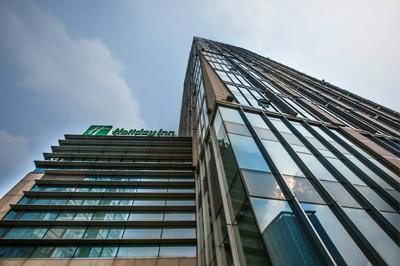 In this area
798 Art District
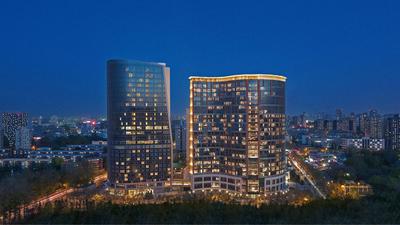
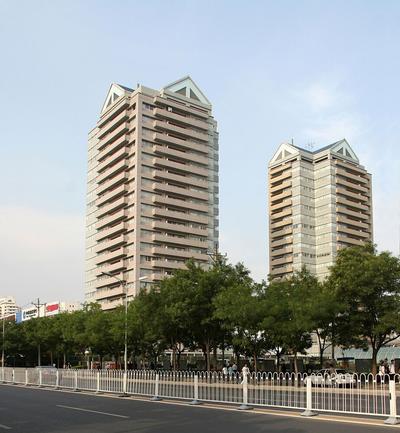
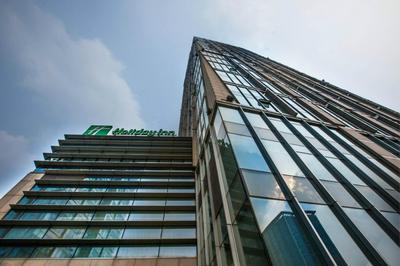
Holiday Inn Beijing Focus Square by IHG
0.0· 136 reviews
approx. from£146 / nightSee prices
 In this area
 In this area
 In this area
 In this area
 In this area
 In this area
 In this area
798 Art District
Holiday Inn Beijing Focus Square by IHG
9.0· 497 reviews
approx. from£146 / nightSee prices
 In this area
Getting around
798 sits along Jiuxianqiao Road in the Dashanzi area of northeast Chaoyang, and there is no metro stop directly at the gate. Plan on a subway-plus-walk or a taxi. By metro, the usual route is Line 14 to Wangjing South, then about a 15 to 20 minute walk, roughly 1.5 kilometres. Jiangtai on Line 14 is a similar distance. Newer Line 12 runs a Gaojiayuan station nearby, and access is improving, so it is worth checking a live map for the closest open exit on the day you travel.
Buses also serve the edges: routes such as 401, 405, 418, 445, 988 and 991 stop near Wangyefen / Dashanzi, a few minutes’ walk from the gates. A taxi or ride-hail from central Beijing is often the least hassle, taking around 20 to 35 minutes from Sanlitun or the CBD depending on traffic. Capital Airport is only about 20 to 30 minutes northeast, which makes 798 an easy first or last stop if your Beijing time is short.
Inside the district, everything is on foot. That is the point. The complex is large and best explored slowly, with benches, cafés and sculpture to pause at. Give yourself at least a half-day, and go on a weekday if you can, when the galleries are calm and the lanes uncrowded. That is when 798 shows its best face: not the version that performs for the crowd, but the one that still feels, under the slogans and steel, like a place where work once happened and now still does — just in a different medium.
Gallery
798 Art District in pictures
798 Art District — your questions
Is 798 Art District worth visiting, and how long should I spend there?
Yes, if you care about contemporary art, design or industrial architecture. It is Beijing’s leading gallery cluster and one of Asia’s best-known art zones. Give it at least a half-day: UCCA alone can take a couple of hours, and the surrounding galleries, sculpture, coffee stops and adjacent 751 D·Park easily fill the rest. A weekday is best if you can manage it.
Is it free to enter 798, or do I need tickets?
Walking the district and its lanes is free, and many galleries are free too. You only pay for ticketed special exhibitions, typically ¥30–¥100. UCCA’s price varies by show and is bought at the desk or via WeChat, and the Meet You Museum’s blockbuster exhibitions are ticketed as well.
Should I stay in 798 or somewhere else in Beijing?
Stay elsewhere and visit. There is almost no accommodation inside 798, and it goes quiet at night. Wangjing is the nearest convenient base; Sanlitun or the CBD give you more evening life with 798 still an easy daytime trip. Choose Gulou only if hutong life matters more than being close to the art zone.
What is the best way to get to 798 Art District?
Take Line 14 to Wangjing South or Jiangtai and walk about 15 to 20 minutes, or use buses that stop near Wangyefen / Dashanzi. A taxi or ride-hail is often simplest, especially from central Beijing, and the airport is relatively close too.