The Beijing issue
Beijing's Day-Trip Duel with the Crowds: Conquering the Great Wall at Mutianyu
Which Great Wall section actually rewards the two-hour drive out of Beijing — and how to walk it without the coach-park scrum.

By Lorenzo FabbriEating Beijing one stall at a time
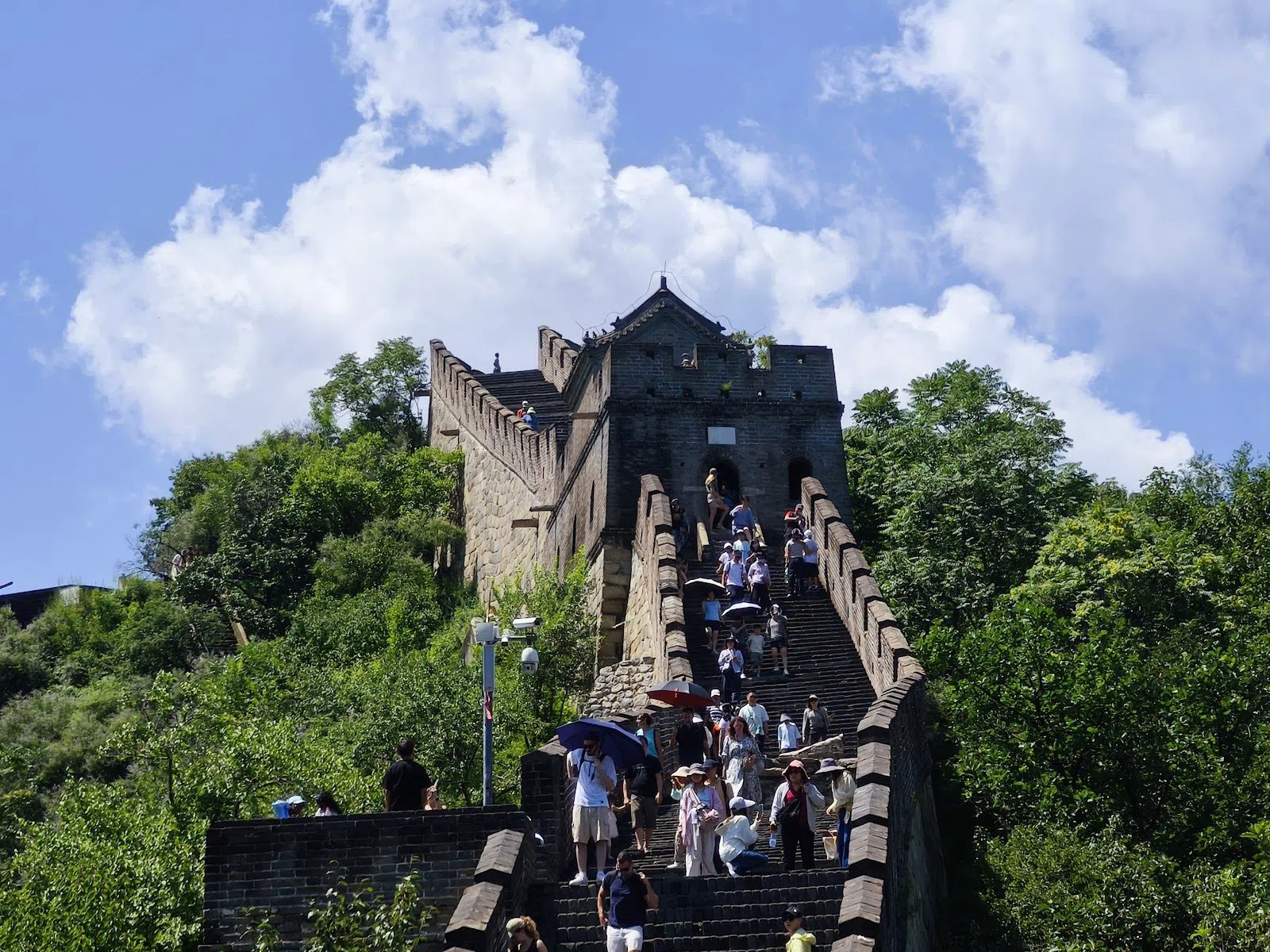
There is a moment on every Beijing Great Wall trip, usually somewhere around the third watchtower, when the coach-park chatter falls away and the ridge just runs — grey brick over green hills, tower after tower, all the way to where the haze eats the horizon. Getting to that moment is the whole game, and it hinges on two decisions: which section you point the car at, and what time you turn up. Choose badly and you queue for a cable car behind four hundred people; choose well and you get the wall almost to yourself before the day-trippers have finished breakfast.
Most visitors funnel toward a handful of restored sections within striking distance of the city, and they are genuinely different beasts — some are wide, safe, family-friendly promenades, others are steep unrestored spines you shouldn't touch without a guide and a litre of water. Below is the honest run-down of where to go for what, who each section actually suits, and how to book so the day works. If you're sorting the trip end to end, our full Beijing guide covers the city itself; this piece is purely about the wall.
The all-rounder, and why most people should just book it
If you want one recommendation and no agonising, take Mutianyu (Huairou District, about 90 minutes north). It is the best all-round choice for the majority of UK visitors and it isn't close. The masonry is properly restored so the walkway is wide and sure-footed, the setting — wooded hills that flush gold in October — is postcard stuff, and crucially it is far less mobbed than the headline section closer to town. Entry is a modest ¥40. A cable car up and a chairlift or toboggan down runs to roughly ¥120 combined, and yes, the toboggan — a metal luge that snakes down through the trees — is the genuine crowd-pleaser it's cracked up to be; kids and hungover stags love it equally.
Mutianyu is also refreshingly unfussy about who shows up. There's no door policy in any meaningful sense — coaches, private cars and walk-ups are all welcome daily, and the cable car and chairlift are built to swallow large parties without much drama. That makes it the safe pick whether you're a couple, a family with a buggy-bound toddler, or a group of twelve. Turn up for opening, walk left toward the steeper, quieter towers while the crowds drift right, and you'll have earned your first ridge-line photo before the queues build.
Plan your Beijing trip
Live prices from our booking partners.
Free cancellation on many rooms. We may earn a commission when you book.
For walkers, photographers and people who came here to earn it
If a wide restored promenade sounds a little tame, the reward for driving further is space. Jinshanling (out toward the Hebei border, roughly 2 to 2.5 hours) is the connoisseur's pick and the one photographers keep coming back for — dramatic tower-to-tower ridge hiking with a fraction of the crowds you'll find nearer the city. It takes small hiking groups beautifully because there's simply room; guided walking parties spread out along the ridge and you can shoot a whole run of towers with nobody in the frame. Entry is ¥65, and there's a single cable car (about ¥30) if you'd rather save your legs for the top. It suits keen walkers and couples happy with a proper half-day on their feet; it's less ideal for anyone wanting a quick in-and-out.
For the truly wild end of the spectrum, there's Jiankou (Huairou District), the crumbling, photogenic 'wild wall' that shows up on every moody Instagram grid. This is a free, unrestored section and it is emphatically not for coaches, families or casual walkers — it's steep, exposed and genuinely hazardous in the wrong shoes. The classic way to do it is the Jiankou-to-Mutianyu traverse, which starts on collapsing wild brick and finishes, mercifully, on Mutianyu's restored path; expect to pay roughly £60 to £110 per person for a guided hike. Only attempt it if you're fit, sure-footed and with a guide who knows the route.
In the same spirit but with more history under your boots, Gubeikou (Miyun District) is original, never-renovated Ming wall — atmospheric, crowd-free and the launch point for the superb Gubeikou-to-Jinshanling ridge walk. The Panlongshan stretch costs ¥35 and other wild parts are free; a guided day hike runs from about £70 per person. It suits small guided groups and it punishes the unprepared: it's demanding in summer heat and largely unrestored, so go with a guide who carries water and don't treat it as a stroll.
After dark, and where the wall meets the water
Two sections break the daytime mould entirely. Simatai & Gubei Water Town (Miyun District) is the only section officially open after dark, and it's the standout evening trip: climb a floodlit wall above a resort-style water town whose canals and lanterns light up below you. It runs on timed-entry night slots that suit organised groups, with the water town itself geared for coaches and families. Budget roughly ¥180 to ¥260 for the combined water-town-and-wall ticket, with the cable car extra — and book both the time slot and the cable car ahead if you're a larger party, because the night slots sell out. This is the trip for couples wanting something with atmosphere and families who'd rather ease into the wall than route-march up it.
Gentler still, and unlike anywhere else near the city, is Huanghuacheng (Huairou District) — the lakeside section where the wall dips down and literally meets the water. It's the least strenuous option within easy reach of Beijing, an AAAA tourist area geared for visitors, with speedboats, a maglev-style train and boat trips that make it a natural for mixed-ability groups. Entry is ¥60 with boat and tour add-ons extra. It comes into its own in summer and autumn and is the kindest choice for families with young children or anyone walking at a slower pace.
First-timers, big groups and the short on time
Sometimes the priority isn't solitude — it's certainty. Badaling (Yanqing District) is the most famous and most accessible section, and the most coach-and-group-oriented of the lot: huge capacity, tickets on the door, no reservation needed, and its own separate night opening. Entry is ¥40 at peak and ¥35 off-season, with night entry ticketed separately. It's the right call for first-timers, mobility-limited travellers or anyone on a tight schedule who just needs to tick the wall off cleanly. The honest caveat: it is by far the busiest section, so either be at the gate for opening or take the night slot — mid-morning in high season is a river of people.
If you're genuinely pressed, Juyongguan (Changping District) is the closest major section to the city — the historic 'inner' pass that once guarded the capital. It's a compact, group-friendly restored loop, often paired with Badaling, and a tidy shorter alternative when you can't spare a full day. Entry is around ¥40. It's a good add-on or a quick standalone climb; just know that 'closest' and 'quietest' are not the same thing.
Who to actually book with
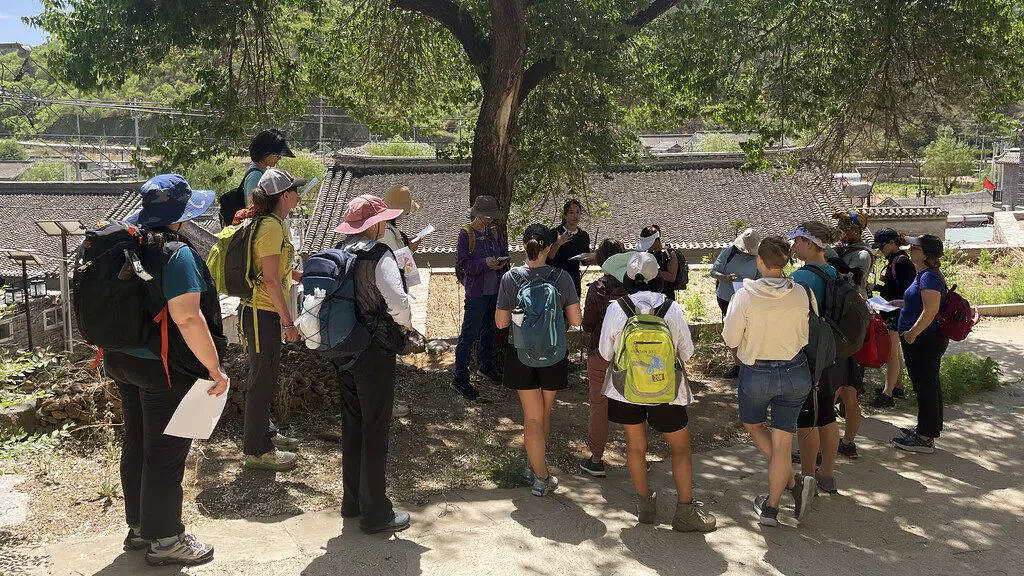
Getting to most of these sections means either a hired car or a tour, and the operator you choose shapes the day as much as the section does. For solo UK travellers who'd like company, Beijing Hikers is the long-running English-language join-in hiking club — going since 2001, built around weekly fixed-date group hikes you book online, with the schedule published one to two months ahead. Reckon on about £40 to £70 per person per day hike including transport. It's ideal if you want a guaranteed walking day without organising your own car and driver.
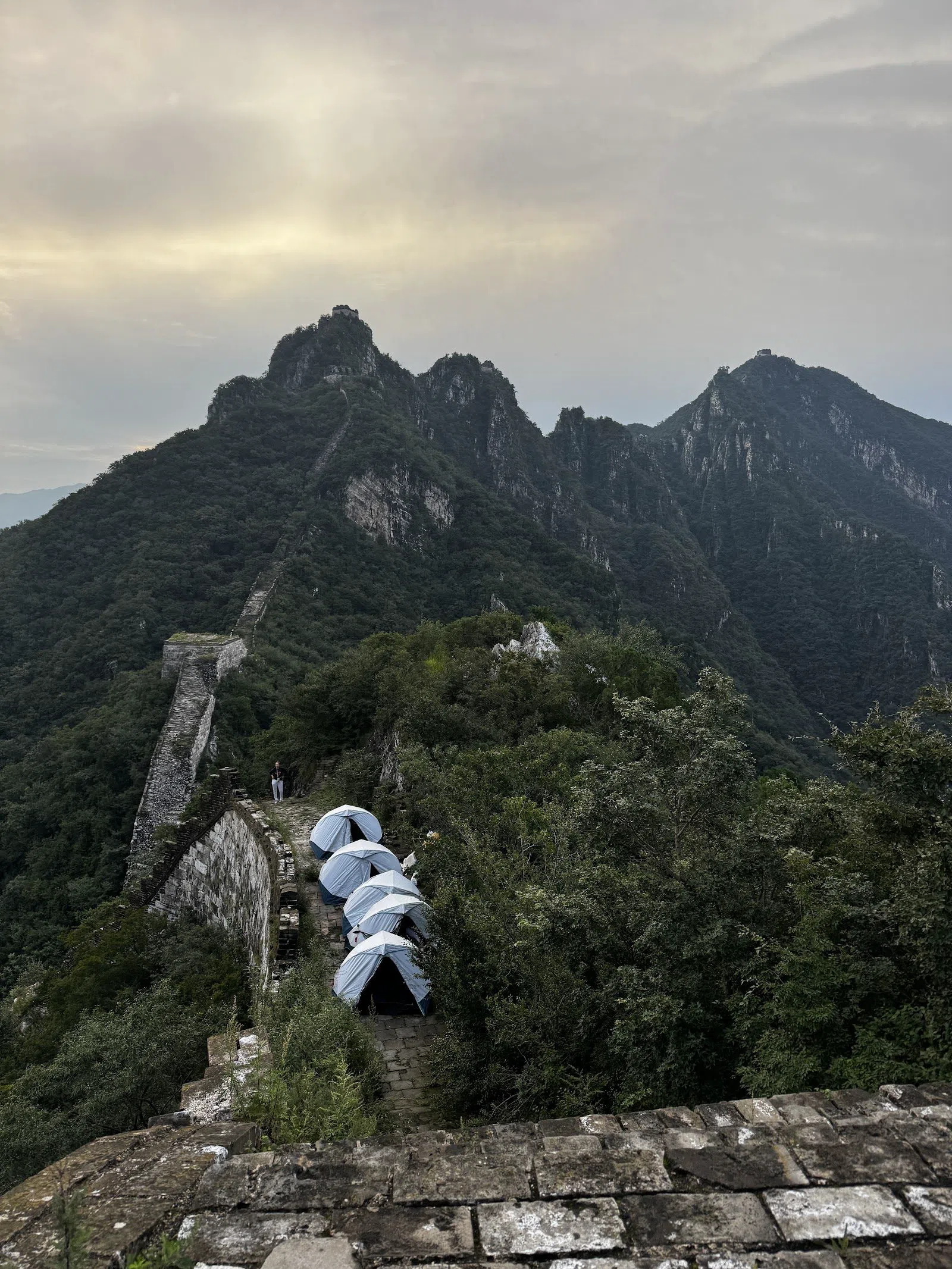
For serious wild-wall ambitions, Great Wall Hiking (greatwallhiking.com) is the specialist — small-group and private hikes, treks and camping on the unrestored sections, running since 2009 with nine English-speaking guides. Day hikes start around £70 per person and multi-day treks price up from there. It's the pick if your heart is set on a proper Jiankou or Gubeikou route or an overnight on the wall, rather than a bus tour.
Families and small groups who want a bespoke, no-nonsense day should look at The China Guide, a foreign-owned Beijing agency running fully private, customisable Great Wall day trips with transparent pricing — roughly £90 to £160 per person depending on group size — and, importantly, no commission-driven jade-factory detours. If you'd rather a guaranteed-departure group tour than a private guide, TravelChinaGuide is the high-volume, long-established English-language operator, offering both scheduled mini-group day tours and private trips to Badaling, Mutianyu and Jinshanling; group day tours start from about £45 per person, with private tours higher.
And for the widest section coverage — including off-beat and hiking-specific itineraries arranged privately — Tour-Beijing.com (China Tour Net) is the veteran local operator, online since 2000, with private cars and vans and group options for every party size and every major section. Private day tours start from about £80 per person, with hiking tours priced separately. It's the one to call if you want a specific or unusual section, like a privately arranged Jiankou hike, sorted without fuss.
The practical bit
Transport. Most sections sit 90 minutes to 2.5 hours north of the city, and there is no single train that drops you at the wall, so your realistic options are a booked tour, a hired car with driver, or — for Badaling and Mutianyu — public transport that still involves connections. For anywhere beyond the two headline sections, a car or a tour is the honest answer; the wild sections require a guide regardless.
Cash. Carry some. Entry fees are small (¥35 to ¥65 for most sections) and cable cars and toboggans are payable on site, but Chinese payment apps dominate and foreign cards are patchy — a little cash smooths over ticket booths, water stalls and the toboggan queue.
Timing. The single biggest lever you have is arrival time. Be at the gate for opening — well before the mid-morning coach wave — or, at Badaling and Simatai, flip the day entirely and go for the night slot. Autumn (late September into November) is the glory season for colour and clear air; midsummer is hot, hazy and hard work on the unrestored sections.
Budget. A DIY day at Mutianyu can come in under £30 a head once you add the cable car; a guaranteed-departure group tour lands around £45; a fully private family day runs £90 to £160 per person; and a specialist guided wild-wall trek starts near £70 and climbs from there. Whatever you pick, sort your base first — a night back in the city beats a long haul home in the dark, and our Beijing hotel search is the quickest way to lock one in.
Pick your section for the day you actually want — Mutianyu to keep it simple, Jinshanling to earn your photos, Simatai for the lights, Huanghuacheng for the little ones — get there early, and the wall will do the rest.
Before you go
Which Great Wall section is best for a first trip from Beijing?
Mutianyu is the best all-round choice for most visitors — about 90 minutes north, well restored, far less crowded than Badaling, with a cable car up and a toboggan down. If you need the easiest access and tickets on the door, Badaling suits first-timers and tight schedules, but it's the busiest by far, so go at opening or take the night slot.
Can you visit the Great Wall at night near Beijing?
Yes. Simatai is the only section officially open after dark, run on timed-entry night slots and paired with the illuminated Gubei Water Town below — book the slot and cable car ahead for larger groups. Badaling also has a separate, ticketed night opening for those wanting the famous section without the daytime crush.
How much does a Great Wall day trip from Beijing cost in 2026?
Entry to most sections is small — ¥35 to ¥65 — with cable cars and toboggans extra (Mutianyu's combined ride is about ¥120). A DIY Mutianyu day can come in under £30 a head; guaranteed-departure group tours start around £45 per person, private family day trips run £90 to £160, and specialist guided wild-wall treks start near £70.
Which section is best for a serious hike rather than a tourist stroll?
Jinshanling is the connoisseur's pick for tower-to-tower ridge walking with far fewer crowds, roughly 2 to 2.5 hours out. For the unrestored 'wild wall', the Jiankou-to-Mutianyu traverse and the Gubeikou-to-Jinshanling ridge are the classics — but both are steep and exposed, so go with a guide. Great Wall Hiking and Beijing Hikers specialise in these routes.
Is the Great Wall suitable for families or slower walkers?
Yes — pick the gentler sections. Huanghuacheng is the least strenuous near Beijing, a lakeside area with boats and a maglev-style train that suits families and mixed-ability groups. Mutianyu's cable car and chairlift also make it manageable for most, and Gubei Water Town at Simatai gives families an easy, atmospheric evening without a hard climb.