 In this area
Guanyuan & Xicheng Lakes
Holiday Inn Beijing Deshengmen by IHG
8.7· 637 reviews
approx. from£80 / nightSee prices
The Beijing issue
A slow, watery corner of Xicheng where canal history, halal roast meats, hutong lanes and lakeside bars still share the same shoreline.
By Zhao MeilinReading Beijing's living history
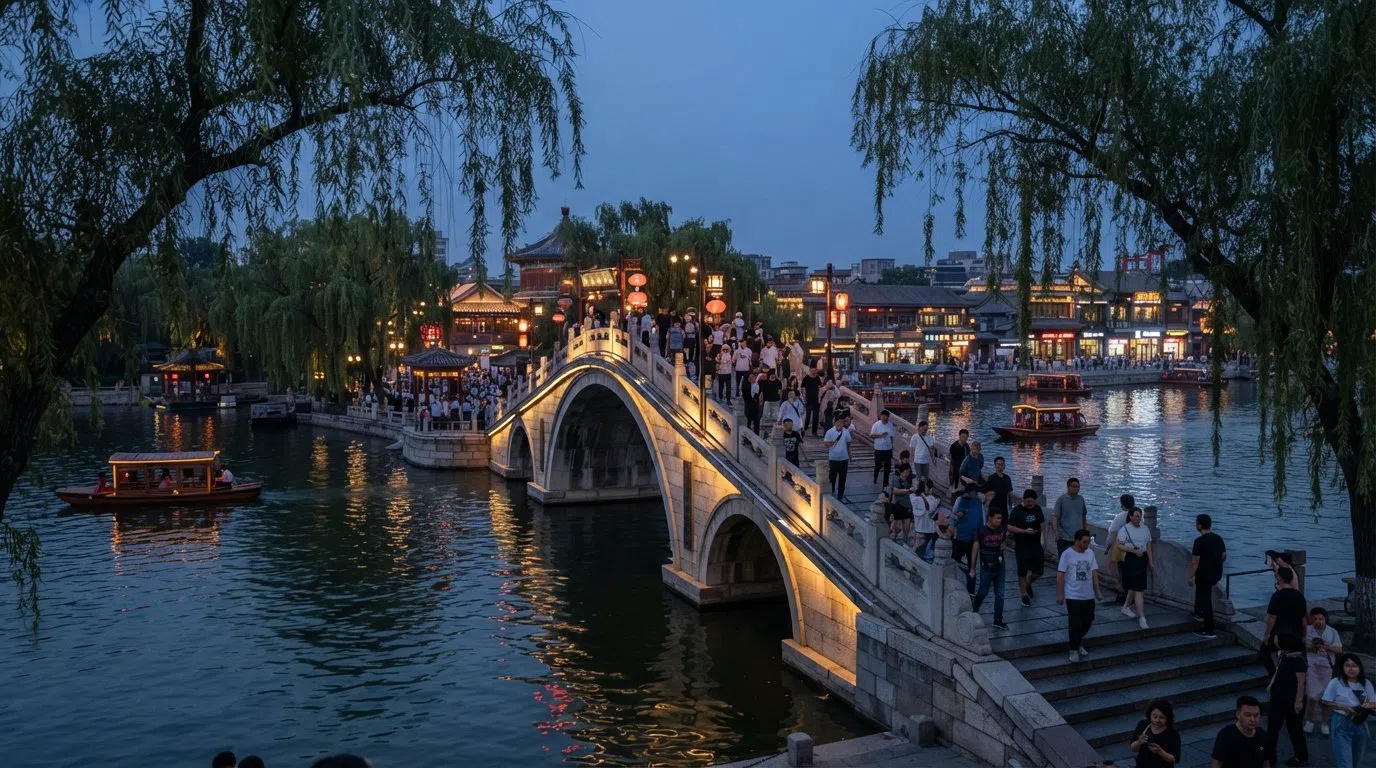
The Silver Ingot Bridge does not hurry. It sits between Qianhai and Houhai like a small stone punctuation mark, and on a clear morning the whole scene opens westward in one quiet sweep: willows, flat water, a few swimmers, and the old city breathing at an unforced pace. This is the Beijing that predates the ring roads, a chain of lakes dug as the northern terminus of the Grand Canal, now ringed by pedal-boat jetties, century-old tripe kitchens and a lakeside bar strip that gets louder than the water deserves. A block inland, the city turns local again — bicycles leaning against grey brick, bedding airing from windows, old men arguing over tea. That contrast is the point here. Guanyuan and the Xicheng lakes are not a district you conquer. You enter, you drift, and if you are wise you let the lanes decide the afternoon.
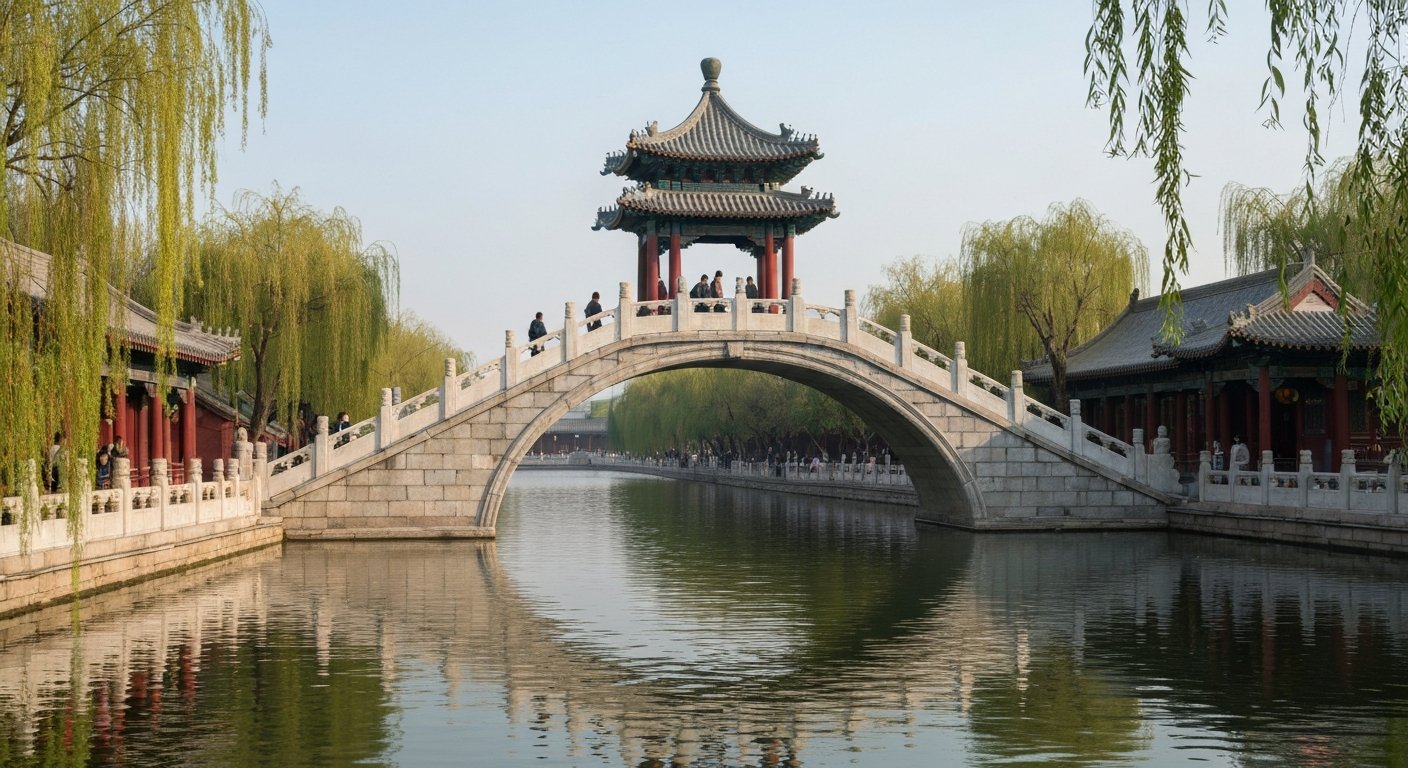
The three lakes are collectively called Shichahai, though most visitors arrive with the names Qianhai, Houhai and Xihai in their heads and only gradually understand that the real subject is the water itself. Qianhai, the Front Sea, is the loudest and most public-facing, edged by the Lotus Market bar-and-restaurant strip. Houhai, the Back Sea, is broader and calmer, its shoreline lined with hutong courtyards turned cafés, teahouses and grilled-lamb joints. Xihai, the West Sea, sits quietest at the top, and since 2023 it has had a free wetland park of lotus beds and boardwalks that makes the whole northern end feel almost rural for a few minutes at a time.
The bridge is the hinge of the whole neighbourhood. Yinding Qiao, the Silver Ingot Bridge, is a single-arch Ming stone bridge shaped like an upturned ingot, and it has long been one of the celebrated small views of old Yanjing. Stand on it and you understand why the lakes became a place to linger after the canal silted up in the Ming era. What had once been a working waterway for grain and goods from Hangzhou turned into scenery, and Beijing, as it often does, kept the bones and changed the use. The old wharves became promenades. The traffic of empire gave way to the traffic of strollers.
The imperial story here is not decorative; it is built into the lanes. Just west of the water, Prince Gong's Mansion remains the best-preserved Qing princely residence in the city, with a 28,000-square-metre garden of rockeries, pavilions and Lake Tai stone that scholars have long linked to the Grand View Garden in Dream of the Red Chamber. On Houhai's north bank, the Former Residence of Soong Ching-ling occupies a garden that once belonged to the father of Puyi. And then, a little further out toward Fuchengmen, Beijing becomes itself again in the most ordinary way at the Guanyuan Flower, Bird, Fish and Insect Market, where songbirds, goldfish and jade are still bought over endless cups of tea. The lakes are scenic, yes. But they are also a working memory of the city.
Live prices from our booking partners.
Free cancellation on many rooms. We may earn a commission when you book.
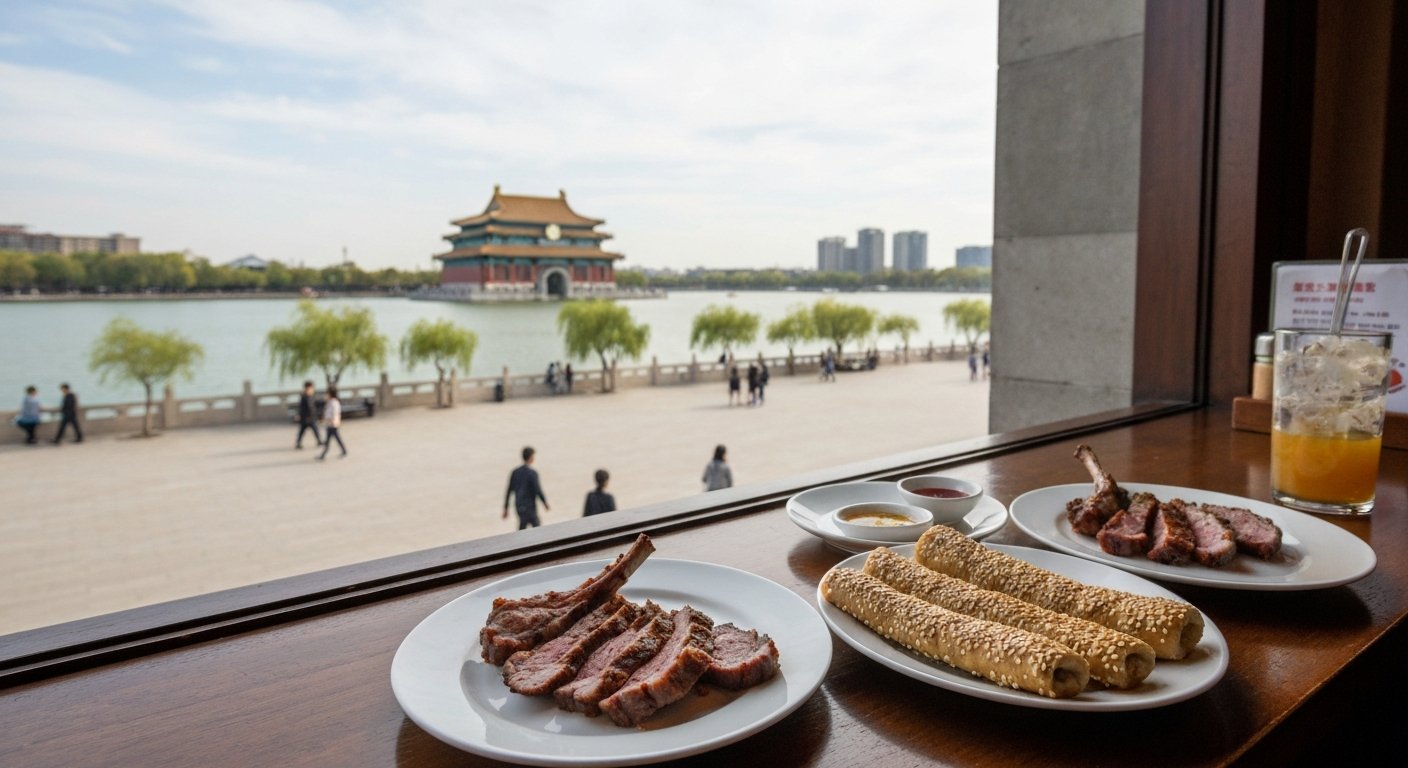
This is one of Beijing's better corners for time-honoured cooking, and much of it is halal, which is no accident. Hui Muslim families long ran the lakeside kitchens, and the old names still matter because they still cook with a certain stubbornness. Kao Rou Ji, at 14 Qianhai Dongyan beside the Silver Ingot Bridge, has been roasting meat since 1848. The house is famous for sliced lamb seared over an open grill and for sesame-crusted shaobing cakes, and if you can secure an upper-floor window table, the lake view makes the meal feel older than it is.
A few doors along, Bao Du Zhang, also known as Dongxingshun, has been doing one thing properly since 1883: baodu, tripe flash-scalded for seconds and dunked in a rich sesame-paste dip. It is a classic Beijing acquired taste, which is another way of saying you should trust the city more than your first instinct. West of the bridge on Ya'er Hutong, Ya'er Liji has held its ground since 1942 with hand-cut lamb, crispy fried tripe and skewers served to a lively local crowd. The room is not trying to be anything other than itself, and that is the compliment.
For a gentler pause, Kong Yiji on the south shore of Houhai cooks refined Zhejiang food built around fish and yellow rice wine. It is a useful reminder that this neighbourhood is not only about heavy lamb and late-night beer. Tangfang Café, by contrast, is modern and calm: hand-poured cups, fruit-forward cakes, a window onto the water, and a bill of around ¥55 a head. When the bar strip starts to rattle, that sort of quiet feels luxurious.
Wander with no agenda and the lakes will hand you snacks as well. Lotus Market's syrupy lotus-root bingwan is one of those local sweets that seems to belong more to the shoreline than to any single shop. The teahouses along the water do what teahouses should do: they slow you down enough to notice who is passing, and what the light is doing to the lake.
Houhai invented Beijing's lakeside nightlife in the early 2000s, when courtyard homes along the shore were converted wholesale into bars. The strip around Lotus Market on Qianhai's west bank remains the beating heart of it, and it is exactly what it looks like: neon, touts, amplified cover bands, and a mostly tourist crowd trying to make a memory out of a beer. If that sounds like a complaint, it is only a partial one. The place can be genuinely fun for a casual drink with a view. It is less convincing if you are after a serious cocktail scene. Locals who know the city tend to have one drink by the water and then disappear toward the Drum Tower lanes.
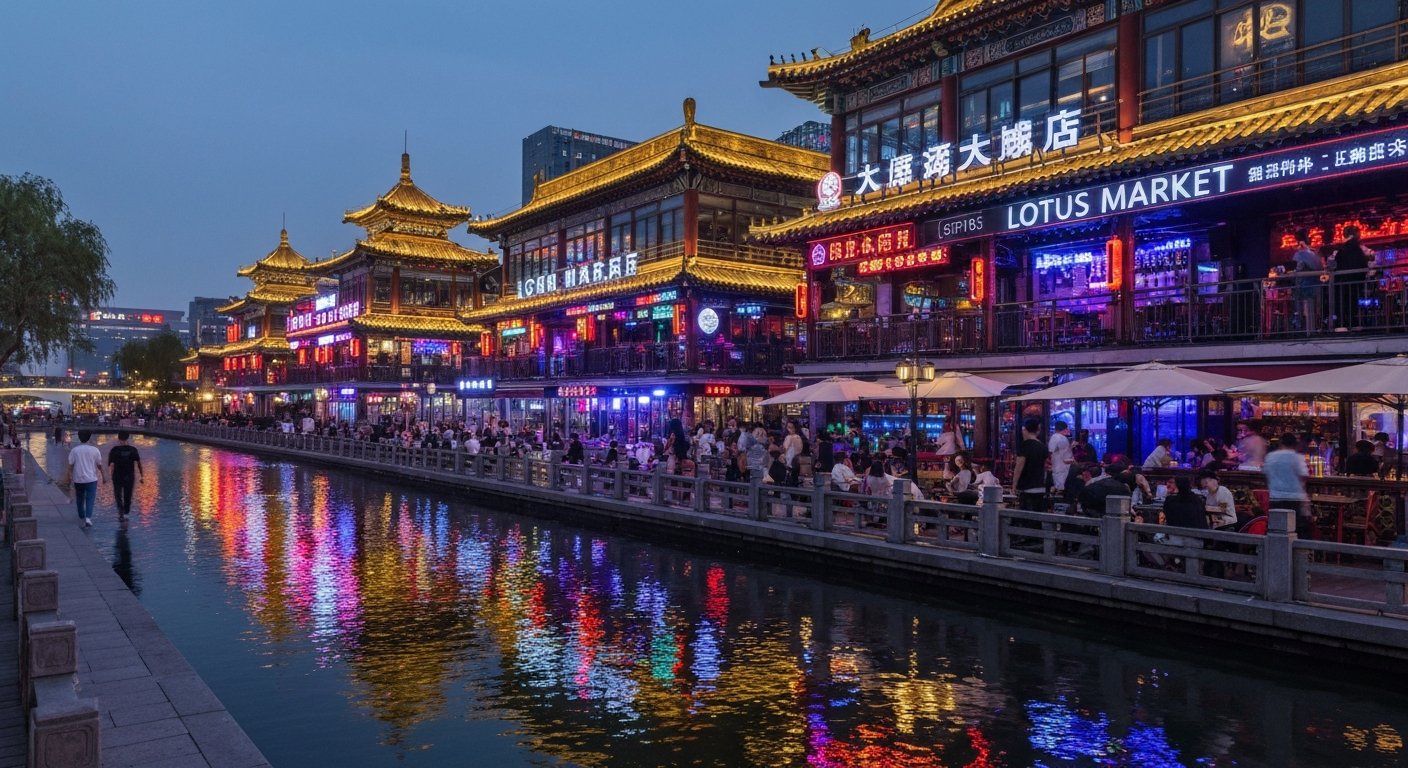
There are exceptions. Slowboat Shichahai Taproom, opened in February 2024 right by the Lotus Market, is the best recent arrival: a three-storey craft-beer bar with around 45 taps, a rooftop terrace and tables made from century-old recycled hutong elm. It looks out over Qianhai, where the scene changes with the seasons — boats in summer, ice skaters in winter. The place has enough room to breathe, which already makes it unusual here.
At the opposite end of the mood scale is No Name Bar, also called Bai Feng, the lake's original signless bar. There is no frontage to perform for, no house band to shout over, just candlelight, plants and the kind of quiet that survives by word of mouth. If the strip feels too much, this is the antidote. The larger lesson is simple: on these lakes, the night works best when you stop trying to control it. Pick a terrace, order a Yanjing or a Slowboat, and watch the water go dark.
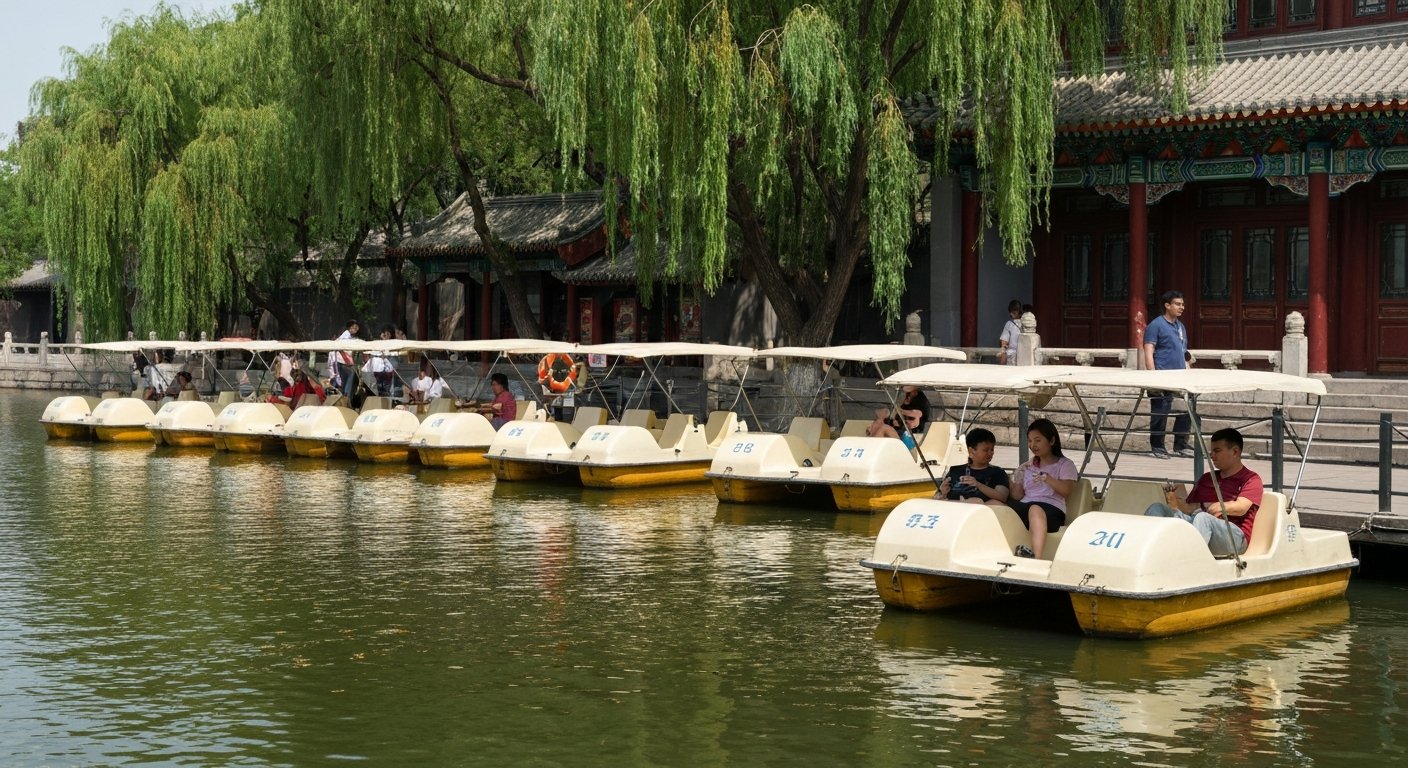
The main event is still the water. From roughly late March to mid-November, you can hire a pedal boat from jetties around Houhai and Qianhai and drift across with a cold beer. When the lakes freeze — usually from mid-December into early March — the same surface becomes an enormous ice rink, with skates, chair-sleds and multi-seat ice bikes for hire. The Shichahai rink runs around ¥100. Beijing does not often give itself over to such obvious seasonal pleasure, so when it does, take the hint.
Walking is the better constant. The full loop of Houhai past the lakeside courtyards is a flat, pleasant hour, and on a weekday morning before the tour groups arrive it feels almost private. Xihai Wetland Park, opened in 2023 and free with no gates, is the quietest stretch of the three lakes, with a 1.45-kilometre lotus boardwalk that turns the idea of a city walk into something softer. The boardwalk is not dramatic. That is its strength. It lets the reeds and water do the work.
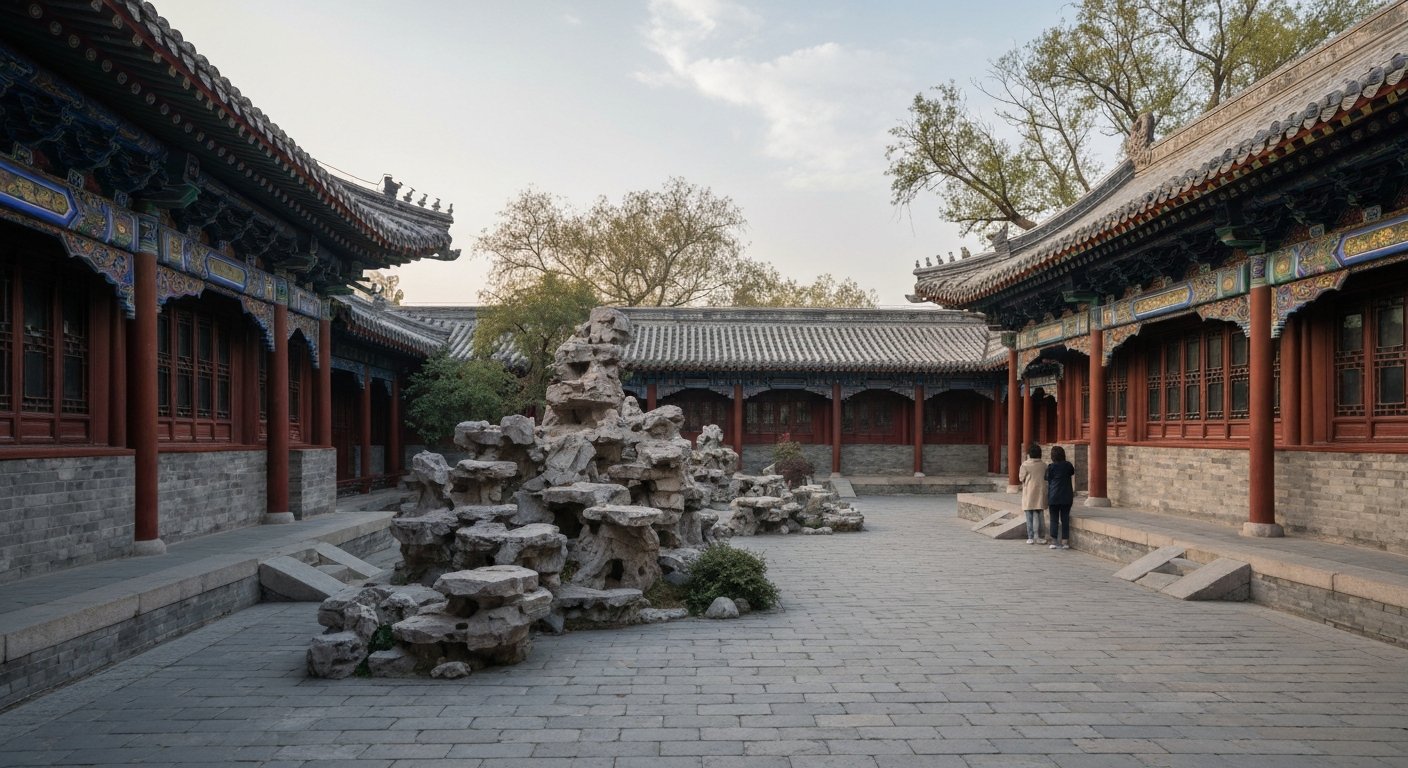
The cultural heavy-hitters are all close enough to combine without rushing. Prince Gong's Mansion costs ¥40, closes Mondays, and rewards an hour or two in the garden alone; the daily opera in its Grand Theatre is worth the detour if your timing is right. The Former Residence of Soong Ching-ling is a serene lakeside garden-museum on Houhai's north bank, ¥20 and closed Mondays. Mei Lanfang Memorial at 9 Huguosi Street preserves the courtyard home of China's most famous Peking-opera master; it costs ¥10 and is also closed Mondays. Just south, Beihai Park — one of the oldest imperial gardens in China — gives you the White Pagoda on Qionghua Island for ¥10 entry, with a small extra for the pagoda hill.
These places matter less as checklist items than as a way of understanding how close old power and everyday life still sit here. One minute you are in a princely garden with Lake Tai stone and opera timber; the next you are back on the lakeshore, watching someone buy fruit, or a swimmer climb out of the water. If you are short on time, a rickshaw hutong tour from the lakeshore is touristy but fun, and it does give the surrounding lanes a narrative shape. Still, the best version of this neighbourhood is self-propelled.
The Prince Gong Mansion, featuring exquisitely preserved Qing-dynasty gardens and residential halls.
The quiet northern shores of Houhai Lake, where locals gather to fish and play chess.
Shopping here is less about brands than about atmosphere and curiosity. Yandai Xiejie, the Skewed Tobacco Pouch Street, is the old spine: an 800-year-old slanting lane running north from the Silver Ingot Bridge toward the Drum Tower, with roughly 230 metres of souvenir shops, snack windows, tea stalls and craft stalls that have been trading since the Ming and Qing. It once sold long-stemmed tobacco pipes, which is where the name comes from. Today it is busy and touristy, but it is also genuinely old, and in late afternoon light the angle of the street gives everything a slight theatrical tilt.
The lanes off the lakes are where the city slips back into itself. Small independent boutiques, print sellers and the odd design studio hide among the courtyards, and even when you are not buying, the walk is rewarding because the scale changes so quickly. Then there is Guanyuan Flower, Bird, Fish and Insect Market out toward Fuchengmen, one of the last classic Beijing pet-and-plant bazaars. Songbirds in bamboo cages, goldfish, crickets in gourds, bonsai and jade trinkets all share the same air, along with knots of retirees haggling and gossiping. It is busiest at weekends, and it is the most complete window into a hobby culture that the tower blocks have not managed to erase.
Bring cash, keep the camera discreet, and do not treat the market like a performance. It is a place to wander, not to conquer. That distinction matters here more than in districts that have been polished for outside consumption.
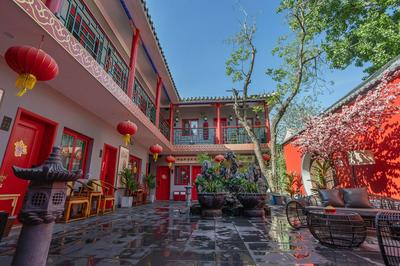
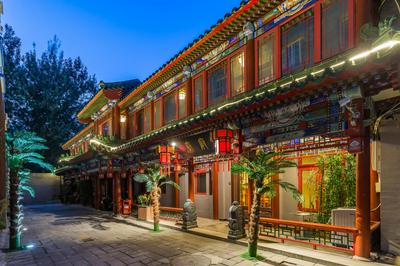
This is a low-rise, courtyard neighbourhood, so accommodation tends to be small boutique hotels and siheyuan guesthouses carved out of restored grey-brick homes in the hutongs, with a handful of international-brand options a little further out toward Xinjiekou and Fuchengmen. The storybook choice is to stay just back from Houhai's north or west shore, or up by quiet Xihai, where the water, willows and residential calm still hold together. You will be within walking distance of Prince Gong's Mansion and Beihai Park, but sleeping somewhere that still feels like a lived-in part of Beijing rather than a decorative set.
Avoid a room right on the Qianhai / Lotus Market strip unless you are a heavy sleeper. The live-music bars run loud and late, and the noise has a way of flattening the whole experience. If you prefer a more everyday street scene and easier access to the metro, staying nearer Jishuitan or Fuchengmen makes sense, often for less money. Prices here run from budget-friendly guesthouse to mid-range boutique; genuine luxury towers are rare inside the lanes, and that is part of the charm.
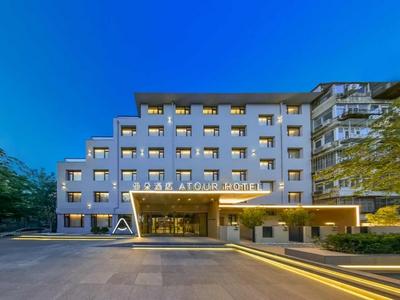
Our best-rated stays in this neighbourhood. Prices are approximate “from” rates — confirmed at the provider when you continue. We may earn a commission if you book through our partners — at no extra cost to you.
In this area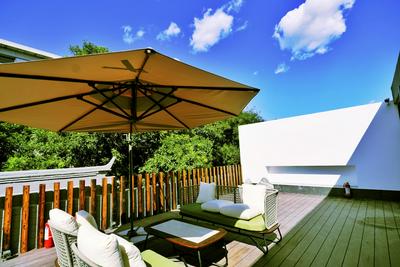 In this area
 In this area
 In this area
 In this area
The lakes are best walked. The full Houhai loop is flat and pleasant, and everything from Prince Gong's Mansion to Beihai Park is within 15 to 20 minutes on foot. The handiest metro is Line 8 to Shichahai station, whose A2 exit drops you at the south end of Yandai Xiejie by the bridge. Line 6 to Beihai North, Exit B, is closest to Prince Gong's Mansion and Beihai Park. Line 2 to Jishuitan serves the quieter Xihai end, and Line 4 or Line 2 to Fuchengmen is the stop for the Guanyuan market.
Bikes and shared e-bikes are ideal for the lakeshore lanes, though the crowds on the bar strip can make riding awkward after dark. Taxis and ride-hailing are cheap but slow to thread the narrow hutongs, so it is usually faster to be dropped at a main road and walk in. The city centre — Tiananmen and the Forbidden City — is about 15 minutes by metro or a 25-minute cab. For the airports, both Capital and Daxing are roughly 45 to 70 minutes by taxi depending on traffic, or you can take the metro to the dedicated Airport Express or Daxing line.
The practical truth is that this neighbourhood rewards slowness. It is scenic, walkable and unmistakably lived-in — touristy at the water's edge, deeply local the moment you step inland. That is a rare balance in Beijing, and one worth protecting with your own pace.
Gallery
Yes, especially for a first trip or for couples and families. You get a green, low-rise, very old Beijing of lakes and hutongs, within walking distance of Prince Gong's Mansion and Beihai Park and about 15 minutes by metro from the Forbidden City. The trade-off is fewer big-brand luxury hotels inside the lanes and noise if you book right on the Qianhai bar strip, so a courtyard guesthouse a block back from the water is the sweet spot.
It is worth it if you know what to skip. The Lotus Market bar strip is touristy and full of cover bands, but the lakes themselves, the willow-lined Houhai shore, the pedal-boating and winter skating, and the mansions and old restaurants around them are the real draw. Come on a weekday morning for calm water, eat at a time-honoured place like Kao Rou Ji or Ya'er Liji, and treat the neon strip as an optional beer-with-a-view.
Yes. When the lakes freeze, usually from mid-December into early March, Shichahai becomes one of Beijing's popular outdoor ice rinks, with rental skates, chair-sleds and multi-person ice bikes. The main rink runs around ¥100. In the warmer months, roughly late March to mid-November, the same water is for pedal boats instead.
The lanes just back from Houhai's north or west shore, or the quieter Xihai side, are the best bets. They keep you close to the water and the main sights, but away from the loudest part of the Qianhai / Lotus Market strip. If you want easier metro access and a slightly more everyday feel, Jishuitan or Fuchengmen are sensible alternatives.