 In this area
Gulou & Beiluoguxiang
Beijing Tangfu Chinese Culture Hotel National Art Museum Nanluoguxiang Branch
8.0· 158 reviews
approx. from£78 / nightSee prices
The Beijing issue
Old Beijing still sets the hour here, but the lanes off Gulou East Street now run on coffee, craft beer and small-room music.
By Zhao MeilinReading Beijing's living history
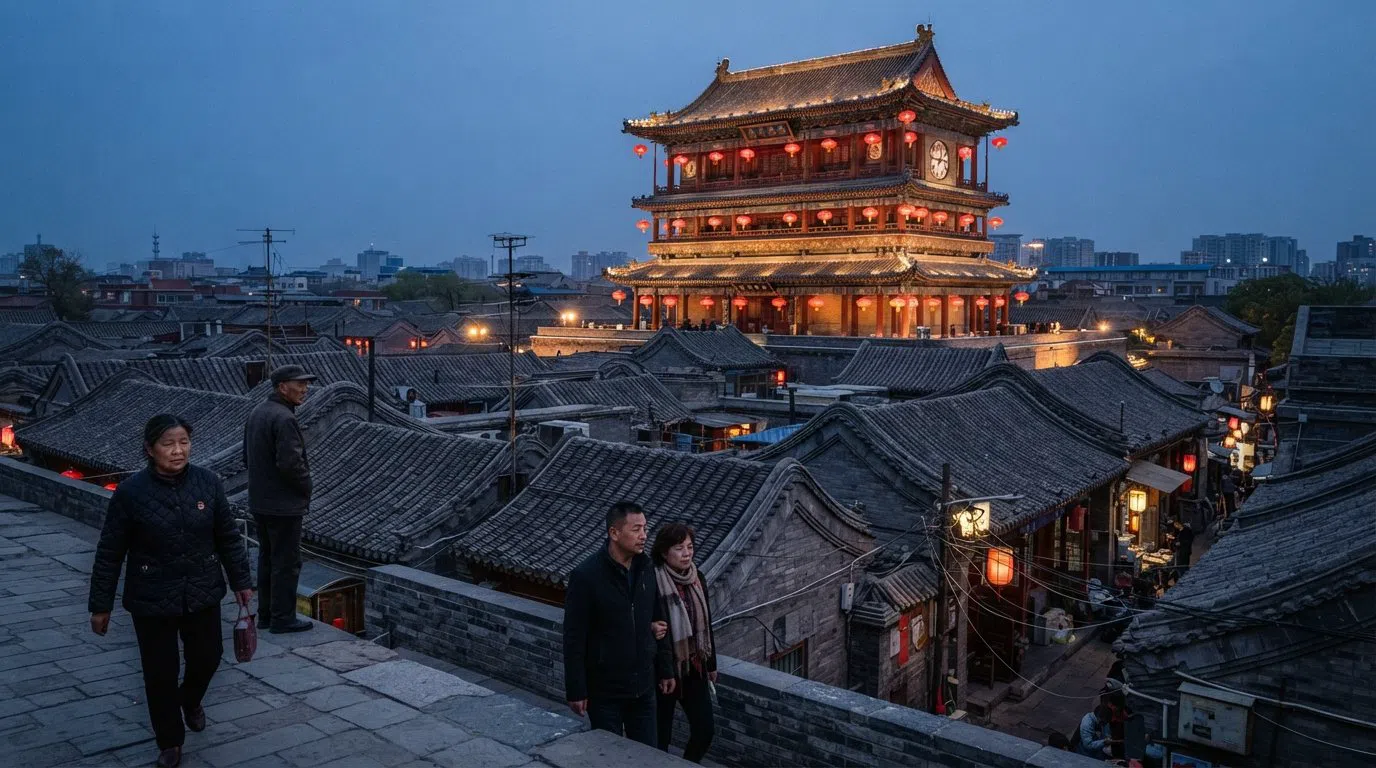
The drum still speaks first in Gulou. Seven times a day, a red-painted beat rolls out from the 600-year-old Drum Tower and across the grey-brick lanes, as if old Beijing has kept one practical habit and refused to lose it. Stand in the square below the towers and you can feel the neighbourhood split neatly into its two lives: one side of the day belongs to pensioners, bicycles and courtyard gates; the other belongs to self-roasting cafés, tiny cocktail rooms and live music tucked behind unremarkable doors.
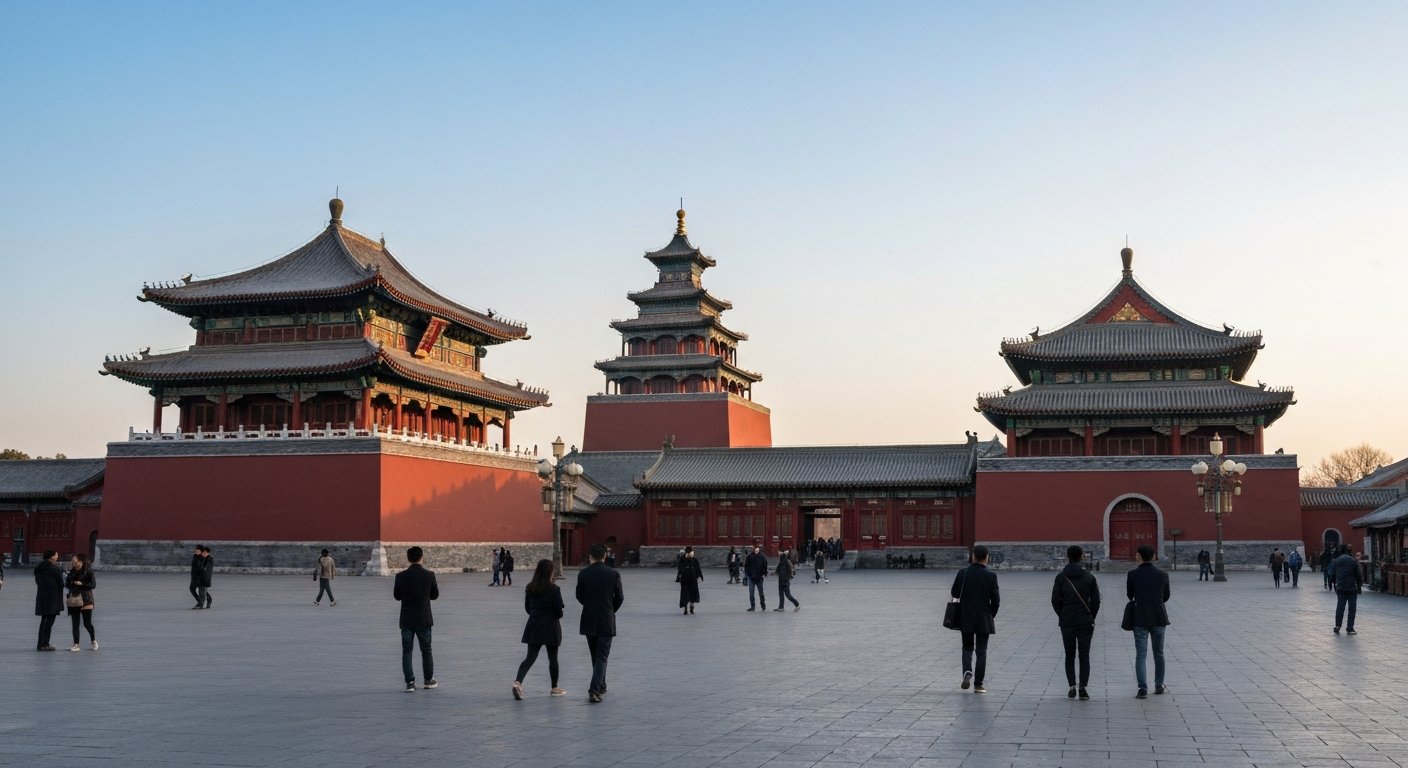
This is the low-rise, grey-brick heart of old Beijing, and it wears its history without fuss. The Drum Tower (Gulou) and Bell Tower (Zhonglou) still anchor the northern end of the old central axis, and they are not just decorative survivors. They were the city’s timekeepers, the pair that once regulated the day for imperial Beijing. The Drum Tower still stages short drum performances several times daily, with the surviving drum thumped by costumed performers roughly every hour from mid-morning to late afternoon. The Bell Tower, its quieter partner, keeps watch across the square. Climbing both is straightforward in the old way: steep original staircases, no theatrical polish, just the climb and the view. The Drum Tower runs about ¥20, the Bell Tower about ¥15, or roughly ¥30 for the combined ticket, with hours shifting by season.
What makes Gulou more than a monument stop is the hutong fabric spread around it. These lanes are not a backdrop; they are the place. By day, the neighbourhood feels lived-in and practical. Residents cycle to the market. Card games happen in the shade. Washing hangs from the line. The streets are too narrow for cars, which is part of the appeal and part of the warning. You move here by foot, by bicycle, by instinct. The soundtrack is not traffic but bicycle bells, coffee grinders and, on the hour, that drum.
Nanluoguxiang is the famous name, and it deserves its fame only up to a point. It is a 740-year-old north–south alley now wall-to-wall with snack stalls and souvenir shops, and yes, it has the atmosphere first-timers come to Beijing hoping to find. But the real reward is in the side lanes that branch off it like fishbones. Mao'er Hutong and Yu'er Hutong still hold the old courtyards, including the former homes of painter Qi Baishi and of Wanrong, the last empress of China. The lane is crowded, loud, and often a little too eager to sell you something. That is fine. Walk it anyway, then step away from the crush and let the older city breathe again.
Across Gulou Dongdajie from Nanluoguxiang’s north end sits Beiluoguxiang, the neighbourhood’s calmer twin. If Nanluoguxiang is the market stall and the souvenir bag, Beiluoguxiang is the coffee grinder and the studio light. It is a street of cafés and small creative rooms with almost none of the crush. Same old Beijing bones, different rhythm.
Live prices from our booking partners.
Free cancellation on many rooms. We may earn a commission when you book.
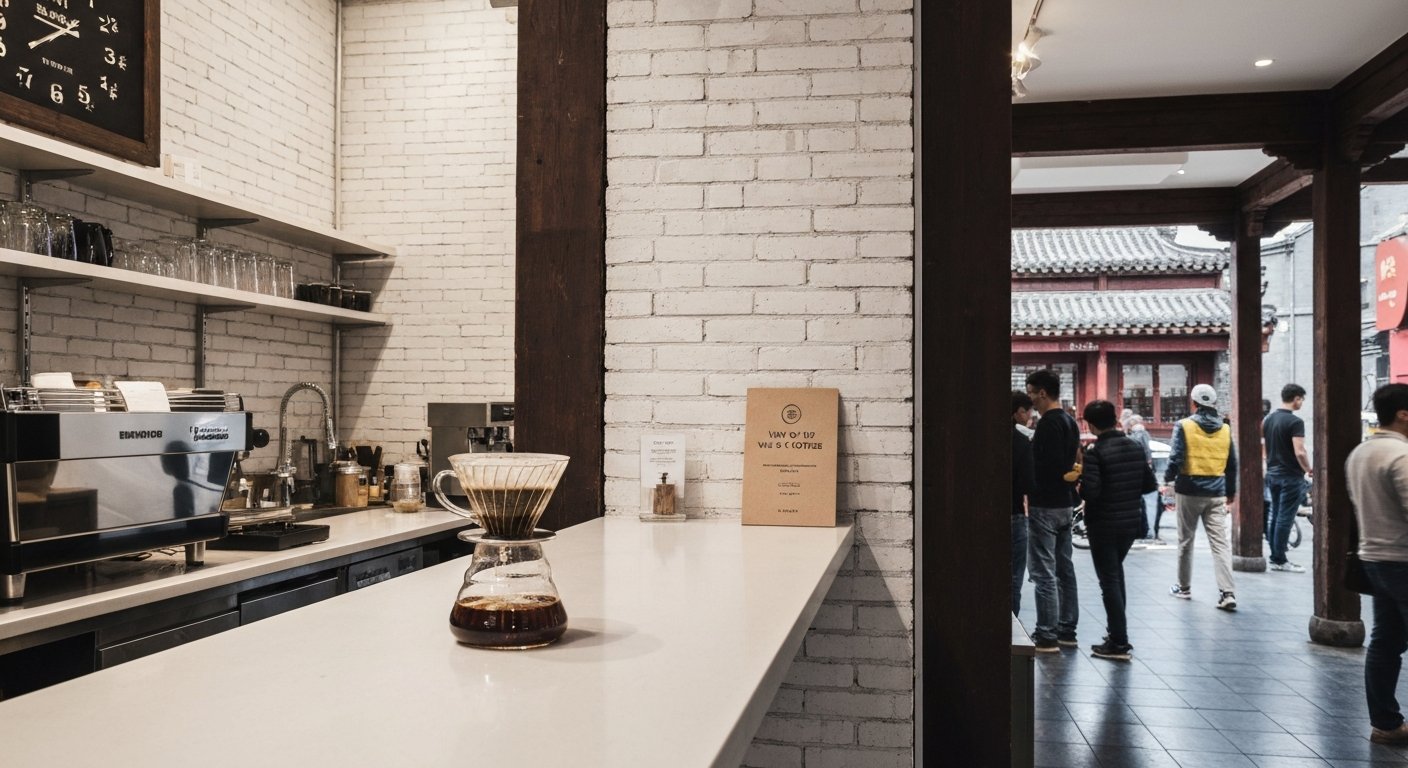
Beiluoguxiang is where the day begins properly. Wake Up & Coffee at 93 Beiluoguxiang is a self-roaster, and that matters here because the place makes you choose. Five single-origin beans sit on offer — two Ethiopians plus Kenya, Colombia and Honduras — before the cup is brewed. The room is stripped back, with exposed beams and white brick, and it feels exactly like what it is: a lane café that knows the difference between a pause and a performance.
A few doors along, Voyage Coffee at 80 Beiluoguxiang takes the same lane in a different direction. It sits in an old brick building under a huge skylight, and the light does most of the work. Order a flat white, add tiramisu if you feel like lingering, and watch the street through that high opening as the day moves on. Next door, RoOM at 84 Beiluoguxiang is the softer room: plant-filled, wooden, calm and airy, the sort of place that makes a long morning feel earned rather than wasted.
For lunch or dinner on the same lane, Yun’er Xiaozhen at 84 Beiluoguxiang is one of the neighbourhood’s long-lived kitchens. It serves Yunnanese food with the sort of confidence that comes from staying put: battered and salt-and-peppered mushrooms, banana-leaf-baked dishes and rooftop tables, around ¥100 a head, daily from 11am to 11pm. The food is generous without being showy. That is the right tone for this street.
If you want the old Beijing appetite for heat, Zhang Mama on 76 Jiaodaokou Nan Dajie is the opposite end of the spectrum: a legendary hole-in-the-wall Sichuan spot where locals queue on street stools for mouth-numbing mala dishes at rock-bottom prices. The menu is Chinese-only, which is part of the fun and part of the point. You do not come here to be coddled.
And then there is TRB Hutong, inside the 600-year-old Zhizhusi temple courtyard at 23 Shatan Beijie. It is the full-dress occasion in the area: a one-Michelin-star contemporary tasting-menu restaurant with white-tablecloth minimalism set against ancient timber. Book ahead. Some places coast on the old walls around them; TRB Hutong uses them properly.
At night, Gulou becomes Beijing’s low-key drinking heart. The currency is craft beer, cocktails and live music in small rooms, not clubs and bottle service. That distinction matters. This is not Sanlitun, and it is better for it. The bars here feel like places people actually meant to open.
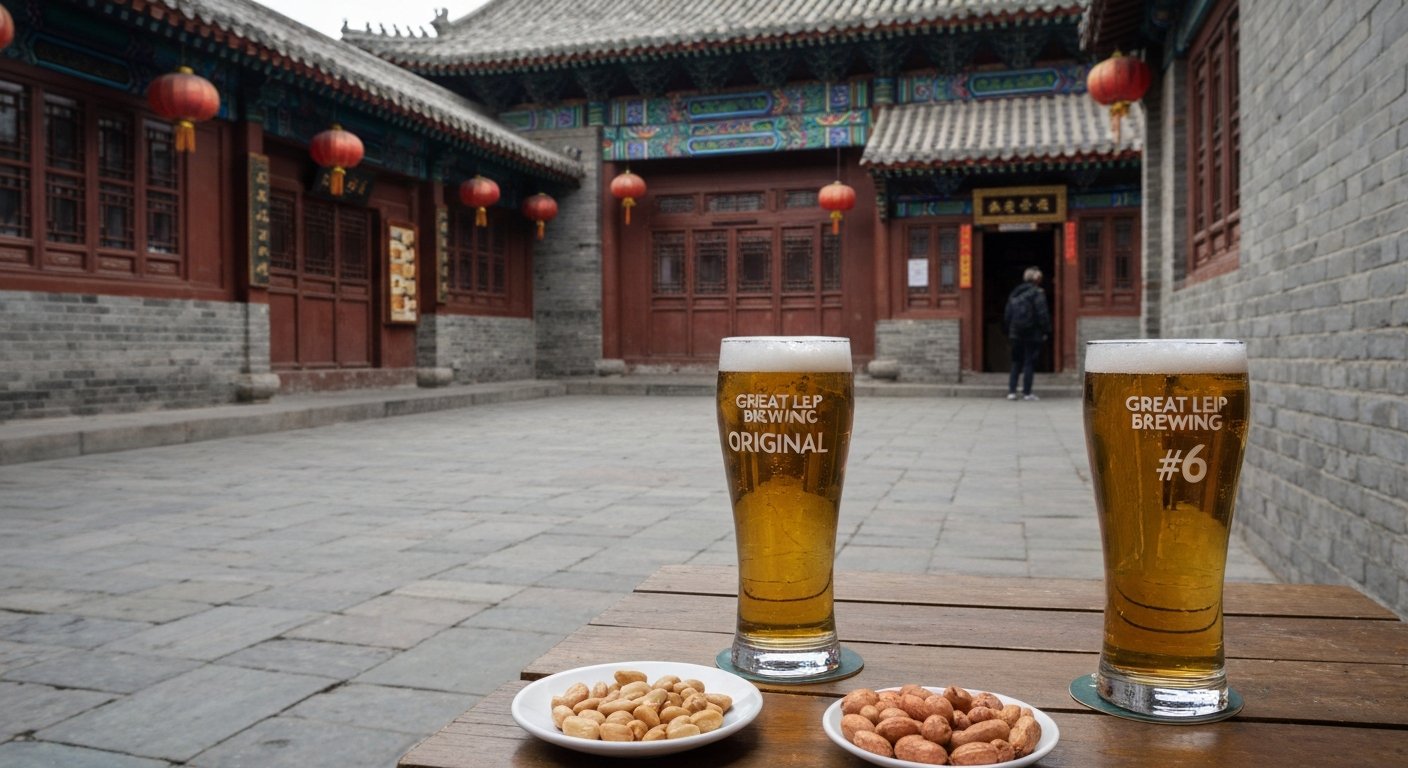
Great Leap Brewing Original #6 still pours in its 2010 home on Doujiao Hutong, and it remains Beijing’s first microbrewery for a reason. It sits in a walled Qing-era courtyard, so you drink pale ale and Szechuan-peppercorn Honey Ma Gold on the flagstones, with free spiced peanuts within reach. It is the kind of place where the setting and the beer are equally the point.
A short walk east, Jing-A Taproom (Longfusi) at 38 Qianliang Hutong is the bigger, buzzier craft option. It has 32 taps, a few draught cocktails and sourdough pizzas from a brick oven, all in a converted-factory space. If Great Leap feels like a courtyard argument that ended in a toast, Jing-A feels like the room after the argument, louder and hungrier.
For cocktails, Mao Mao Chong at 12 Banchang Hutong is the hutong classic. It is tiny, and it knows it. The signature drinks carry the bar’s personality in their names alone: the Sichuan-peppercorn Mala Mule, the lemongrass-and-kaffir-lime Ladyboy. Prices are among the fairest in town, and there are gourmet pizza deals midweek. That combination — sharp drinks, modest room, no pretence — is exactly why people keep finding their way back.
Modernista at No. 44 Baochao Hutong goes in a different direction. It is a 1930s jazz-age bar with a black-and-white ballroom floor, a good absinthe list and live music, cabaret or life-drawing most nights. The room has a bit of theatre in it, but not the expensive kind. It feels like someone preserved a mood rather than a museum.
Hot Cat Club, in the 46 Fangjia Hutong arts complex, is where the folk-blues end of Beijing’s scene lands. It runs live sets and a free Wednesday comedy night, with beers from around ¥15. This is the neighbourhood’s useful truth: you do not have to be looking for a big night to have one.
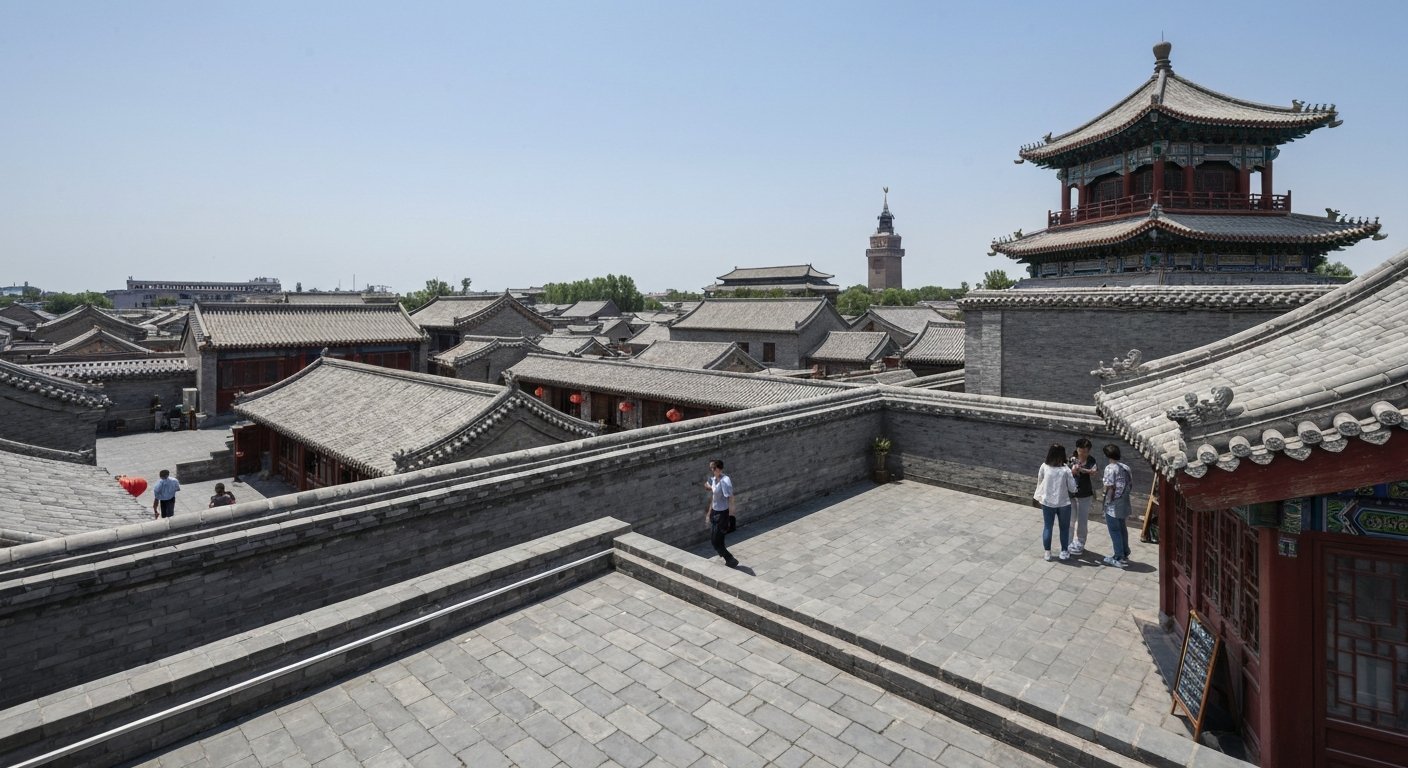
The single best thing to do here is walk. Start at the Drum Tower, climb for the drum performance and the rooftop view north over grey-tiled courtyards to the Bell Tower, then wander the square and drop into the lanes. That first view tells you everything: old Beijing still standing, and still busy.
Nanluoguxiang is the headline hutong, and it should be treated as such: an atmosphere to trace, not a place to conquer. Walk it end to end, then keep ducking into the eight fishbone side-alleys where the crowds thin and the real courtyards begin. Mao'er, Yu'er, Ju'er and the others are where the neighbourhood stops performing for visitors and returns to itself. You may also pass the former homes of Qi Baishi and Wanrong there, reminders that these lanes have held more than cafés and snack stalls.
Cross to Beiluoguxiang for the quieter version of the same street. The contrast is the point. On one side, the crush and the souvenirs; on the other, self-roasting cafés, studios and a slower pace. If you want to understand the district, do both and notice how little distance separates them.
Then push west to Shichahai and Houhai, the willow-lined lakes a short walk away. In summer you can hire a pedal boat; in winter, skate. Or do neither and simply follow the shore past courtyard mansions. It is the easiest extension of the neighbourhood, and one of the few places in central Beijing where the city opens out without losing its spine.
Renting a bike, or grabbing a shared bike through the app, is the local move. The lanes are flat, the distances are forgiving, and you can loop the towers, the lakes and Jingshan Park’s hilltop view over the Forbidden City in an easy afternoon. Come back at dusk. The Drum Tower is floodlit, the bars fill, and the whole area settles into its best hour.
The historic Drum and Bell Towers rising above the low-rise rooftops.
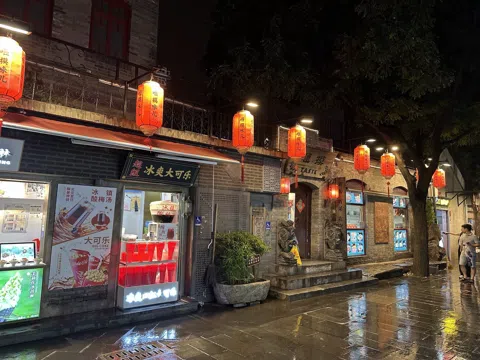
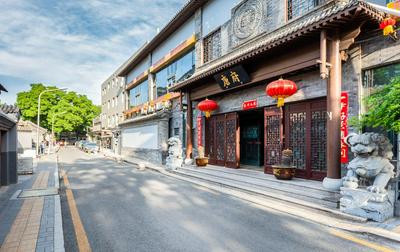
Beiluoguxiang alley, which offers a quieter, more authentic alternative to the highly commercialized Nanluoguxiang.
Shopping here is small, independent and heavy on Beijing kitsch rather than luxury. Nanluoguxiang is the obvious place to start, though not always the best place to linger. Expect embroidered opera masks, clay figurines, cloth shoes, silk scarves and more bubble tea than anyone needs. Still, there are useful exceptions.
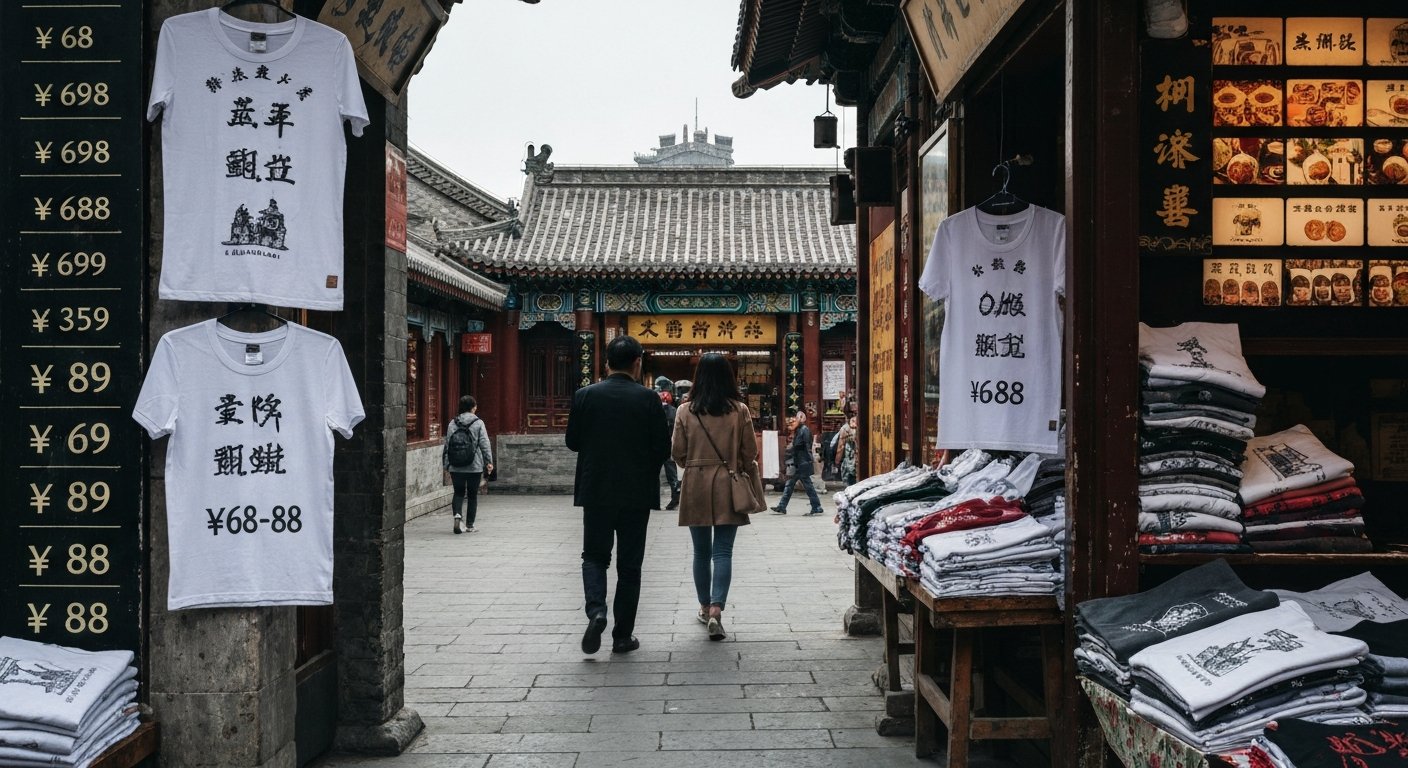
Plastered 8 on Nanluoguxiang is the stand-out local brand. Its T-shirts print old Beijing icons onto tees — a subway ticket, the old ¥1.20 taxi-flag rate, Erguotou and Yanjing beer labels — for roughly ¥68–88. That is a smarter souvenir than the generic stall inventory, and it tells you more about the city than a dozen novelty fridge magnets.
For a very Beijing snack-shopping stop, join the line at Wenyu Cheese Shop, also on Nanluoguxiang, for old-style fermented milk and double-skin milk pudding in little bowls. It is the sort of place that makes sense because people keep standing in line for it. Off the main lane, Beiluoguxiang trades the souvenir crush for the odd design studio and small boutique, while the 46 Fangjia Hutong complex — a converted factory courtyard between Andingmen and the Lama Temple — packs galleries, design shops and record-and-book corners into its yard.
This is not a district for luxury retail. It is for objects with a local accent, things you can carry home without pretending they are anything more than they are.
This is courtyard-hotel country. The most atmospheric beds are boutique hotels and guesthouses carved out of restored siheyuan, where rooms open onto a small central yard rather than a corridor. That is the charm. The trade-off is practical: lanes are narrow, some rooms have compact or shared bathrooms, and cars cannot always reach the door. Bring a small case and expect to walk the last stretch.
DuGe Courtyard Boutique Hotel is the design-led benchmark here, set in a Qing-dynasty courtyard that once belonged to an imperial minister, on a lane near Nanluoguxiang. If you want the storybook version of staying in old Beijing, aim for a courtyard place near Nanluoguxiang, Beiluoguxiang or the Drum Tower. If you want a little more ease, staying closer to Gulou Dajie or Andingmen metro keeps the hutong feel while putting a train a couple of minutes away. Prices run budget-to-mid for guesthouses and mid-to-high for the boutique courtyards, and wherever you land you are central and a short ride from the Forbidden City and the lakes.
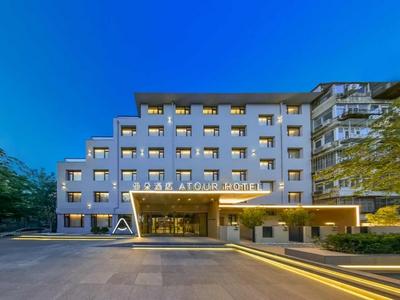
Our best-rated stays in this neighbourhood. Prices are approximate “from” rates — confirmed at the provider when you continue. We may earn a commission if you book through our partners — at no extra cost to you.
In this area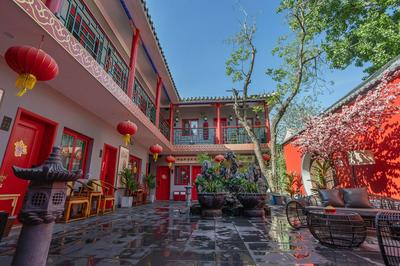 In this area
 In this area
Gulou is small and made for walking. You can cross from the Drum Tower to the Lama Temple end in about twenty minutes, and most lanes are too tight for cars anyway. That is not a flaw; it is the reason the area still feels like a neighbourhood rather than a stage set.
Nanluoguxiang station, on Line 6 and Line 8, sits right at the core, with Exit E coming up straight onto the alley. Gulou Dajie station on Line 2 and Line 8 is a short walk north-west by the towers, Shichahai on Line 8 is next to the lakes, and Andingmen on Line 2 covers the eastern side. From here, the Forbidden City and Jingshan are a 25–30-minute walk or a couple of metro stops south, and Tiananmen is a short ride on Line 8 or Line 2.
Cycling is the true local mode. Grab a shared bike by app and loop the towers, lakes and lanes. Just walk the busiest stretches of Nanluoguxiang, where the crowd makes riding pointless. For the airports, it is roughly 45–60 minutes by taxi or metro to Beijing Capital (PEK), and longer to Daxing (PKX) in the far south. The Capital Airport Express connects via Dongzhimen, a few stops east on Line 2.
Gallery
Yes, especially for a first or second visit that wants character over convenience. You sleep in old-Beijing hutongs with courtyard hotels, cafés and bars on the doorstep, a walkable core, and the Forbidden City and lakes a short ride away. The trade-offs are practical: lanes are narrow, cars cannot always reach the door, courtyard rooms can be small, and Nanluoguxiang is crowded by day. If you want big modern hotels, malls and nightclubs instead, Sanlitun or the CBD suit better.
Very. Central Beijing is one of the safer big-city environments to walk day or night, and the hutongs here are residential and well-used after dark. Take the normal precautions — watch your bag and phone in the Nanluoguxiang crush and around busy metro exits, and mind bikes and scooters in the narrow lanes.
They are two ends of the same historic axis, separated by Gulou Dongdajie. Nanluoguxiang is the famous, crowded one — snack stalls, souvenir shops and quiet side lanes where the real courtyards hide. Beiluoguxiang is the calm twin: a low-key street of self-roasting cafés, small studios and a couple of good restaurants and bars, with almost none of the crowds.
Climb the Drum Tower, then walk the lanes between the Drum Tower, Nanluoguxiang and Beiluoguxiang. That gives you the neighbourhood’s full argument in one go: old Beijing, the crowds, the cafés and the bars, all within a few blocks.