Beijing专刊
Where Beijing's Emperors Prayed at the Temple of Heaven
Beijing's imperial sacrifice ground is best walked south to north, early in the day, and the hall everyone comes for is shut on Mondays.

作者:Lena BrandtBeijing on foot, hutong by hutong

The Danbi Bridge runs 360 metres dead straight, north to south, through a grove of gnarled 500-year-old cypresses, with old Beijingers singing and playing cards in the shade either side. Park-only entry costs ¥10 off-season, from 1 November to 31 March, and ¥15 in peak season, from 1 April to 31 October. The grounds open at 06:30 off-season and 06:00 in peak, and they are the only part of the park open before 08:00.
Walking the axis from south to north
Temple of Heaven (Tiantan Park) is a walled UNESCO world heritage park with four gates, and the east gate is the metro gate. Arrivals spread across all four, so no single entrance takes the whole day's crowd. Coach groups come through the complex all day.

Start at the south end and walk north, against the standard flow. The Circular Mound Altar and the Echo Wall (Yuanqiu Tan / Huiyin Bi) stand at that end: three concentric tiers of bare white marble, no building on top, a single round centre stone at the summit. A smooth curved brick wall rings the altar and carries a whisper along its face. Come early, because the whisper fails once more than a handful of people are talking at the wall.
The altar is open sky and never pinches for capacity. Architecturally it is the more interesting half of the axis, and it is the half most people reach last. From the summit the route north puts you on the Danbi Bridge, the raised stone causeway that holds the whole complex on one line. The visitor service centre on the bridge has been shut for rebuilding since 10 April 2026.
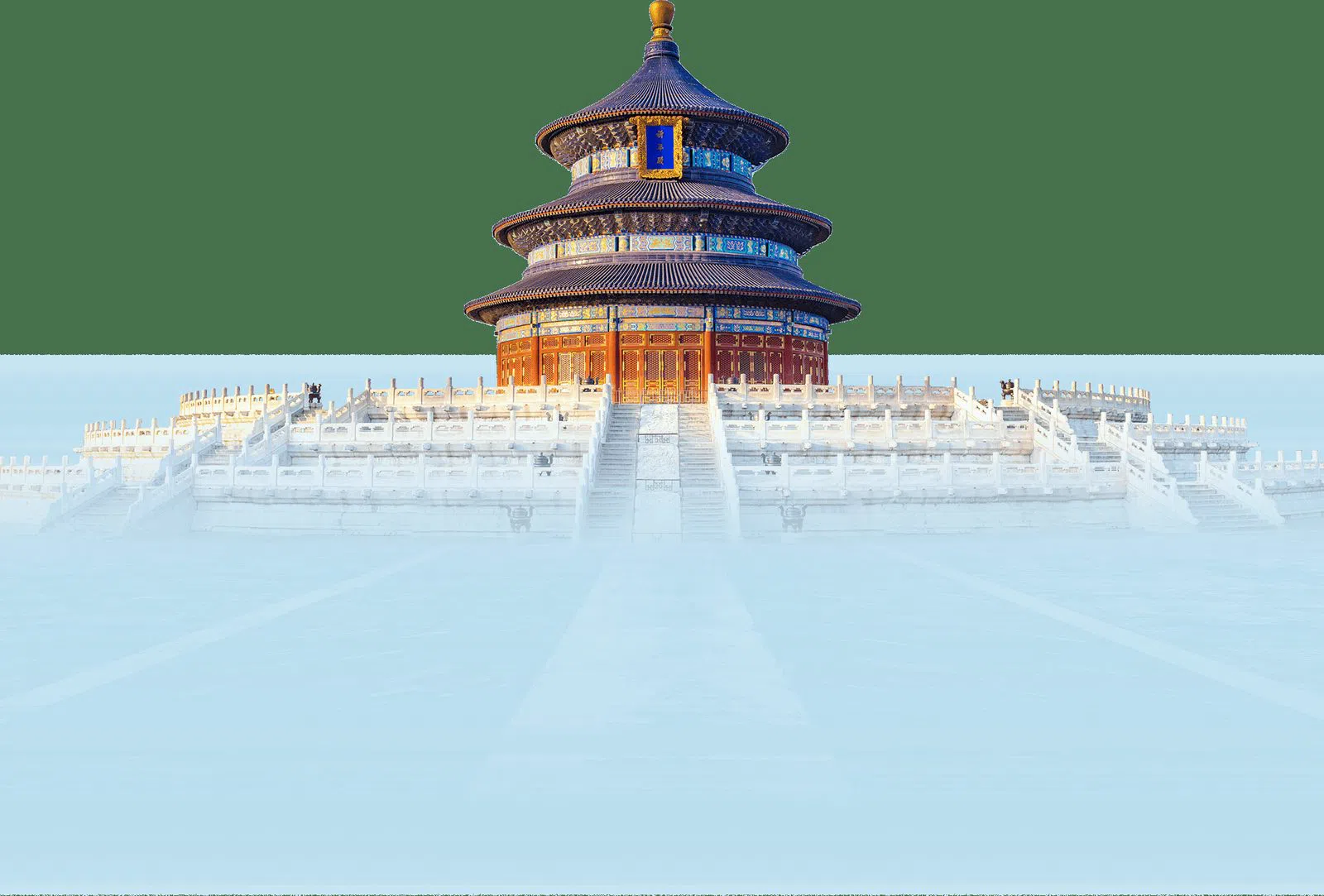
The Hall of Prayer for Good Harvests (Qinian Dian) stands at the north end: a circular wooden hall under three stacked cobalt-blue glazed tile roofs tapering to a gilded finial, raised on a three-tier white marble terrace with carved balustrades. It is the reason to buy the combination ticket. The terrace works as a one-way circuit and bottlenecks at the doorway, and guides brief their groups outside the south gate before they go up.
规划您的Beijing之旅
实时价格,来自我们的预订合作伙伴。
许多客房可免费取消。您预订时,我们可能会获得佣金。
Where to go when the terrace fills
The Hall of Abstinence (Zhai Gong) is a small walled palace inside its own moat, roofed in green glazed tiles in place of imperial yellow. The main hall is a beamless brick vault, and a bronze bell pavilion stands in the courtyard. The emperor fasted here before the sacrifice. Almost nobody comes now, and the narrow bridges over the moat mean single-file entry. Walk over when the Hall of Prayer terrace is shoulder to shoulder.
The Temple of Heaven Museum at the Divine Music Administration (Shenyue Shu) occupies a long low Ming courtyard hall in the park's south-west corner. Racks of bronze bells and stone chimes sit under dim spot-lit timber beams, with rows of ritual dancers' costumes alongside. It reopened on 10 February 2026 after a full rebuild and became the lead gallery of the new Temple of Heaven Museum, unveiled on 13 June 2026. More than 1,500 square metres of gallery here is indoors, and visitors still largely walk past it. It closed briefly for maintenance in September, so check the park notices at the gate.
The Temple of Heaven Rose Garden (Yueji Yuan) covers one hectare of roses planted in blocks of colour, with low clipped hedges and the blue roofs of the temple complex rising behind the trees. More than 10,000 plants grow here in more than 200 varieties of Beijing's city flower. There is no ticket check and nothing to pay on top of park entry. Make the detour from mid-May to late October. Outside that window the beds are bare sticks, so skip the garden in winter.
Tickets, gates and booking ahead
The combination ticket (lianpiao) costs ¥28 off-season and ¥34 in peak season, and it covers the Hall of Prayer, the Circular Mound Altar and the Echo Wall, the Hall of Abstinence and the Divine Music Administration museum. Park-only entry buys the grounds, the cypress groves, the Danbi Bridge and the rose garden.
Guided day tours that take in the temple run seven days a week, Monday to Sunday, and they are booking up steadily. Book ahead if you need a fixed date. Nothing inside the park requires a guide; the gate price is the whole cost of admission.
How long it takes
The axis is a single line, and the walk from the Circular Mound Altar up to the Hall of Prayer carries most of a visit. Add the Hall of Abstinence and the music museum and you are still inside one park, with no transport between stops. The ticketed halls shut at 17:00 and the grounds run on until 22:00, which is the window for the cypress groves and the causeway without a ticket queue.
Best time to go
Arrive in the park's first opening hour. The groups do not hold that hour, and the shade either side of the causeway belongs to the card players.
On a Monday every ticketed hall closes and the grounds are all you can walk. The Hall of Prayer has two exceptions: it opens on a Monday that falls on a public holiday, and it opens every day from 15 July to 31 August.
In cold weather the music museum is the indoor stop already on your ticket.
Breakfast and hotpot at the gates
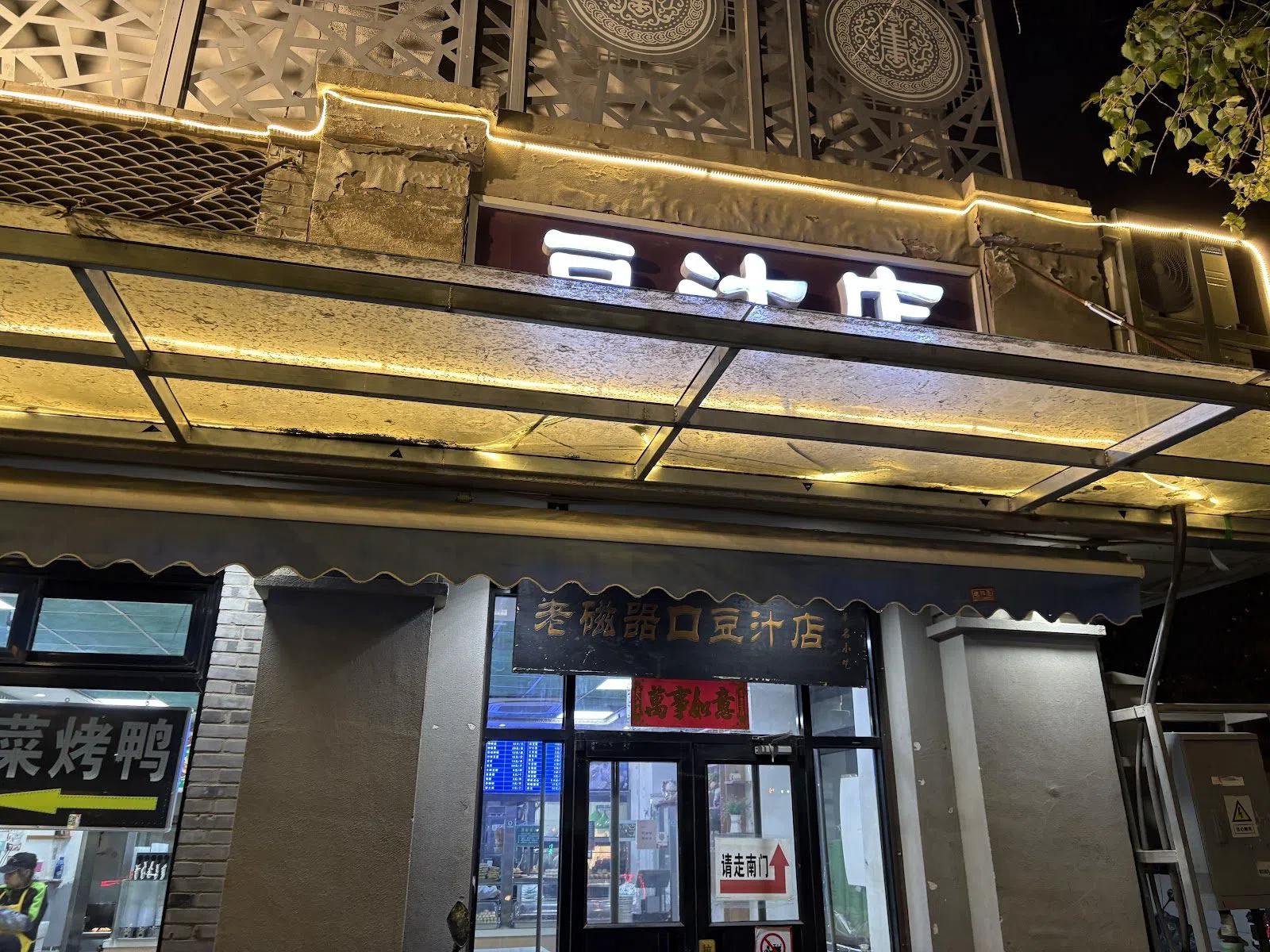
Lao Ciqikou Douzhi Shop (Temple of Heaven branch), opposite the temple's north gate, is a plain tiled canteen with enamel bowls of grey-green fermented mung-bean drink on formica tables and stacked rings of fried dough behind the counter. It opens 06:00 to 20:00, which lines up with the park's dawn opening. Reckon on ¥15 to ¥25 a head, walk-in seating, no bookings taken. The upstairs sit-down room serves proper dishes from 11:00. Douzhi is an acquired taste and half your group will hate it.
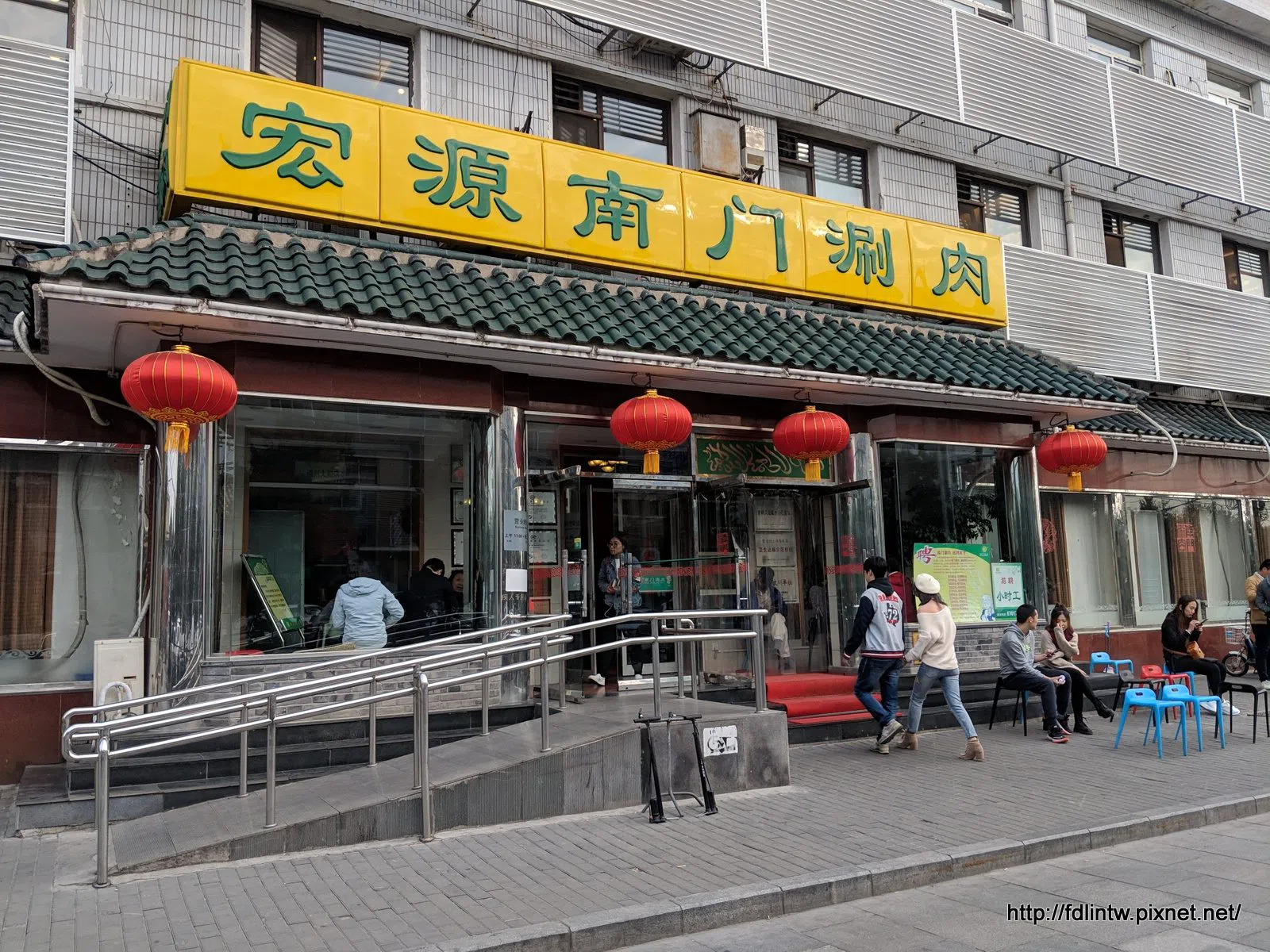
Nanmen Shuanrou, by the temple's south gate, runs copper-pot mutton hotpot. Brass chimney-pot hotpots steam on every table, with plates of paper-thin hand-sliced mutton fanned out and bowls of sesame paste and chive flower sauce. It was founded in 1994 and named after this location. It opens 11:00 to 22:00, is halal, and costs about ¥100 a head. The flagship by the south gate is the busiest of them, so reserve.
A rooftop view over the cypresses
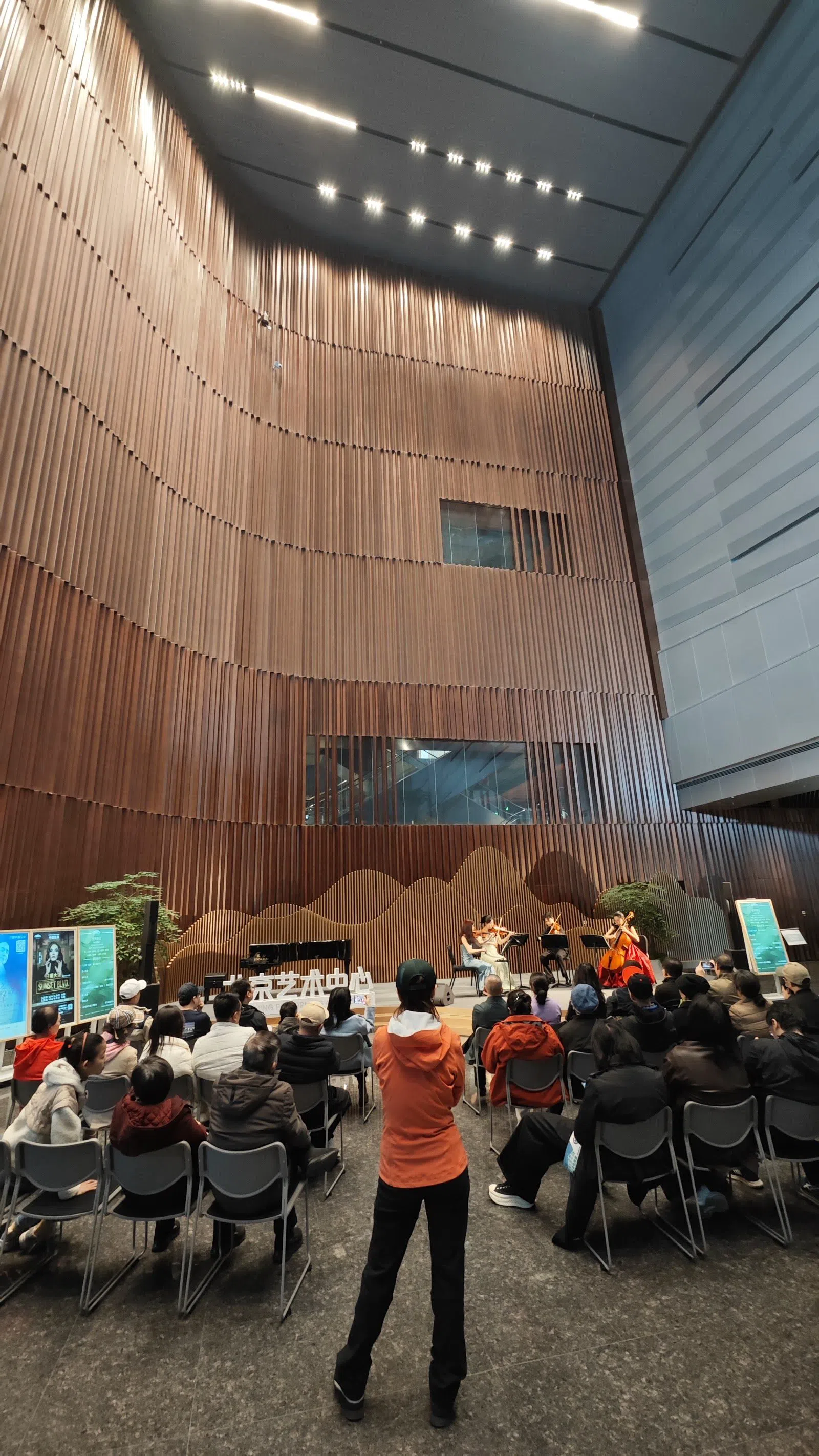
Guantan Art Space sits on the Hongqiao Market fifth-floor terrace. Seven hemispherical glass pods are scattered across the roof like pearls, each echoing the Temple of Heaven's Seven Star Stones, and the blue triple roof of the Hall of Prayer floats above the cypress canopy opposite. It opened under the city's 2026 rooftop-terrace push, and it gives the only above-the-trees view of the hall that does not involve a drone. Coffee, afternoon tea or a drink runs ¥40 to ¥120 a head. The pods seat a few people each, a full coach will not fit, and booking is by phone.
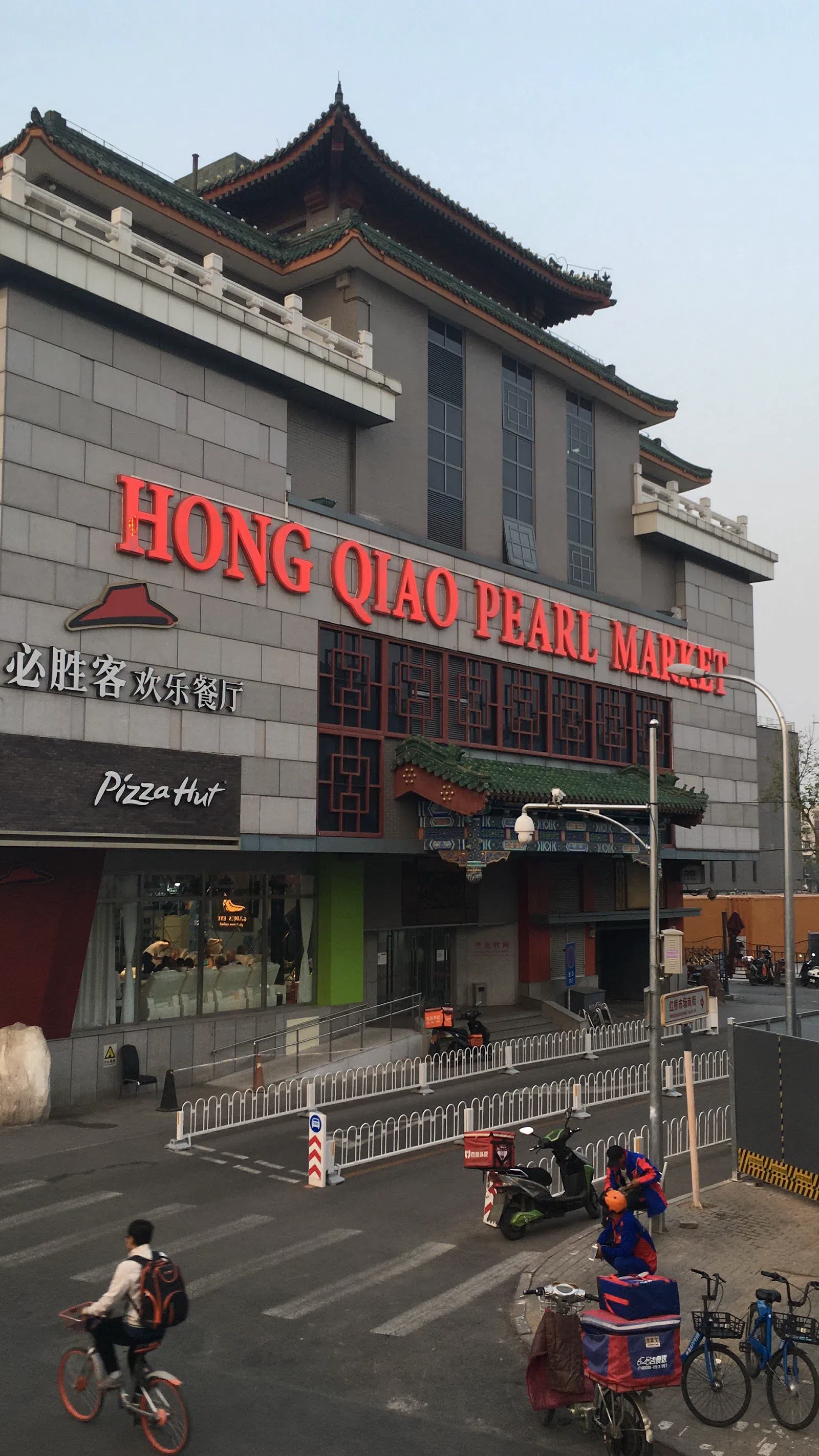
Hongqiao Market (Pearl Market) is the multi-storey mock-antique building directly facing the temple's east wall, two minutes from the east gate. Floors of glass counters are heaped with strings of freshwater pearls under strip lighting. It opens daily 10:00 to 19:00, with lifts and an underground car park. Opening prices are fantasy and only bargaining moves them. Haggling is expected, from ¥50 for trinkets to thousands of yuan for graded pearls.
North up the axis to Qianmen
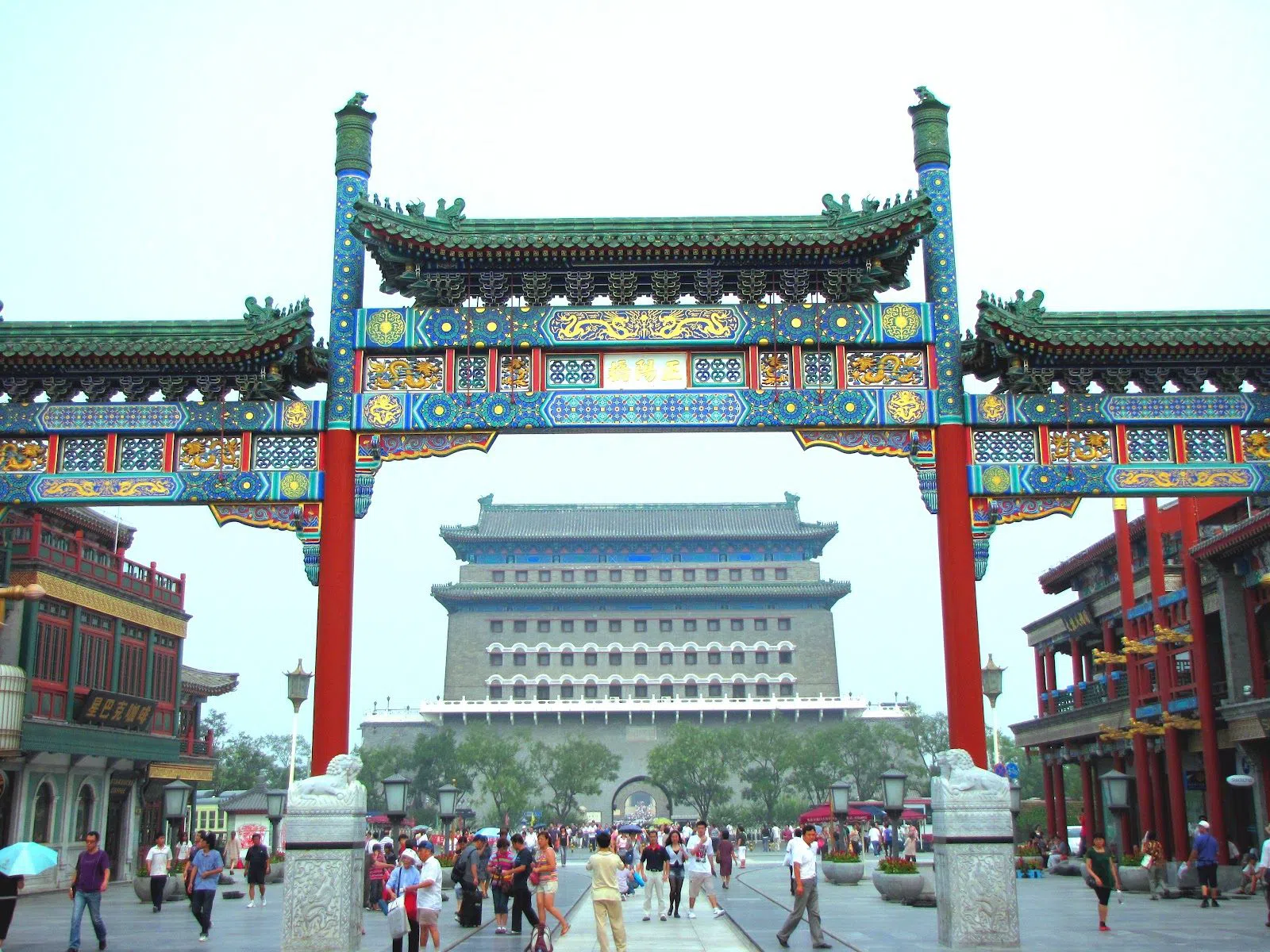
Zhengyangmen Gate Tower (Qianmen) is a huge grey-brick Ming gate tower with a double grey-tiled roof straddling the central axis, swifts wheeling around the eaves and Qianmen Street's shopfronts running away south below. It reopened on 27 July 2026 after six years shut, and the upper floor gives a straight sightline north to Tiananmen Square and south down the axis toward the Temple of Heaven. Entry is ¥20 for adults and free for under-18s and over-60s, Tuesday to Sunday, 09:00 to 17:00. Timed tickets are released online daily and the upper floor is tight, so expect to wait if you turn up on the hour.
Tianqiao South Street and the walk west
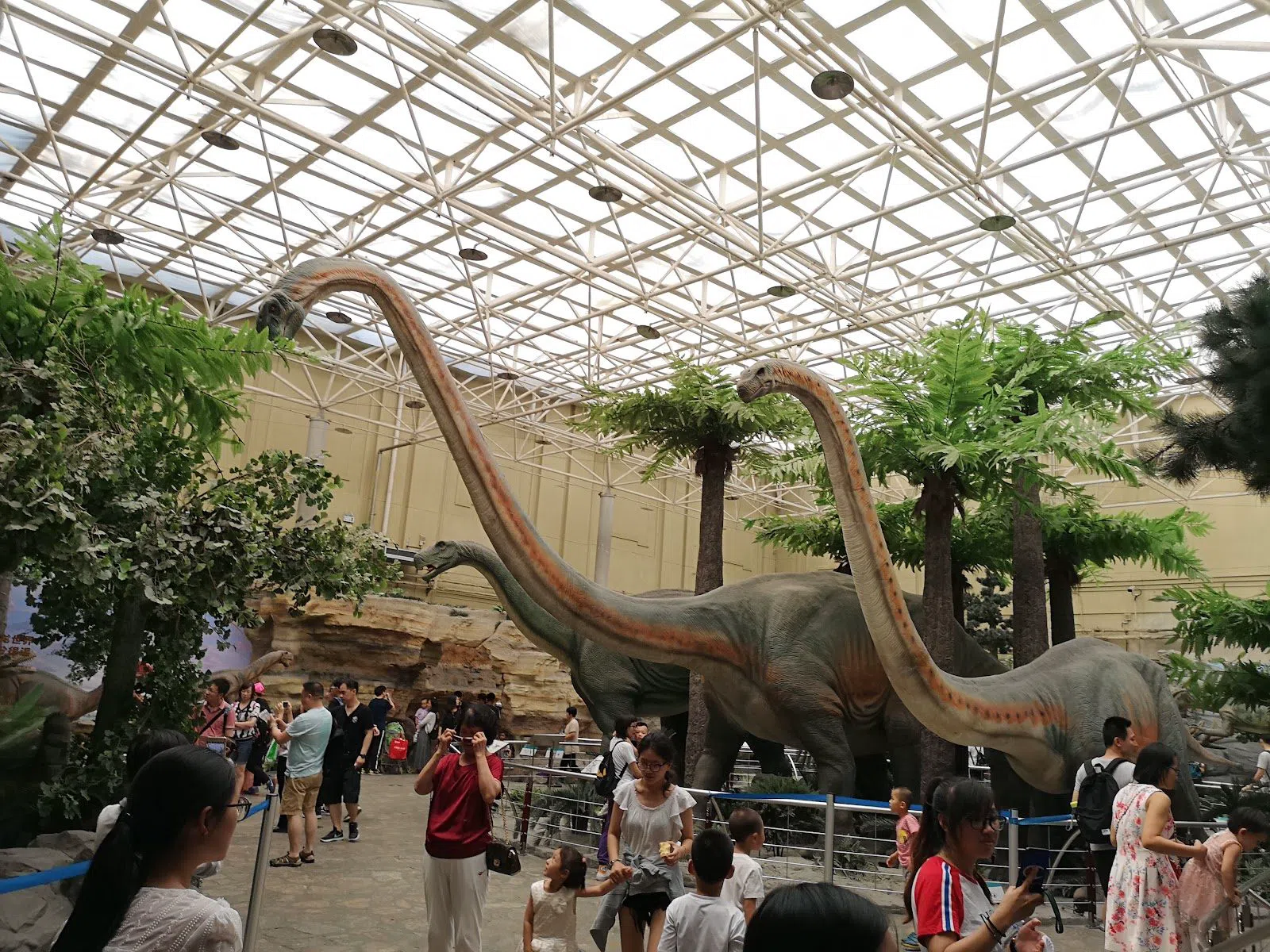
The National Natural History Museum of China fills a 1950s Soviet-influenced grey block on Tianqiao South Street, with mounted sauropod skeletons in a tall skylit hall and children packed around the dinosaur plinths. Entry is free and advance reservation is compulsory. Individuals book up to three days ahead in one of three named entry slots, and groups must arrange a group reservation in advance. It was renamed from the Beijing Museum of Natural History in June 2023, and older guidebooks and signage still carry the old name. It closes on Mondays, and on Tuesdays in high summer. Slots go fast in school holidays.
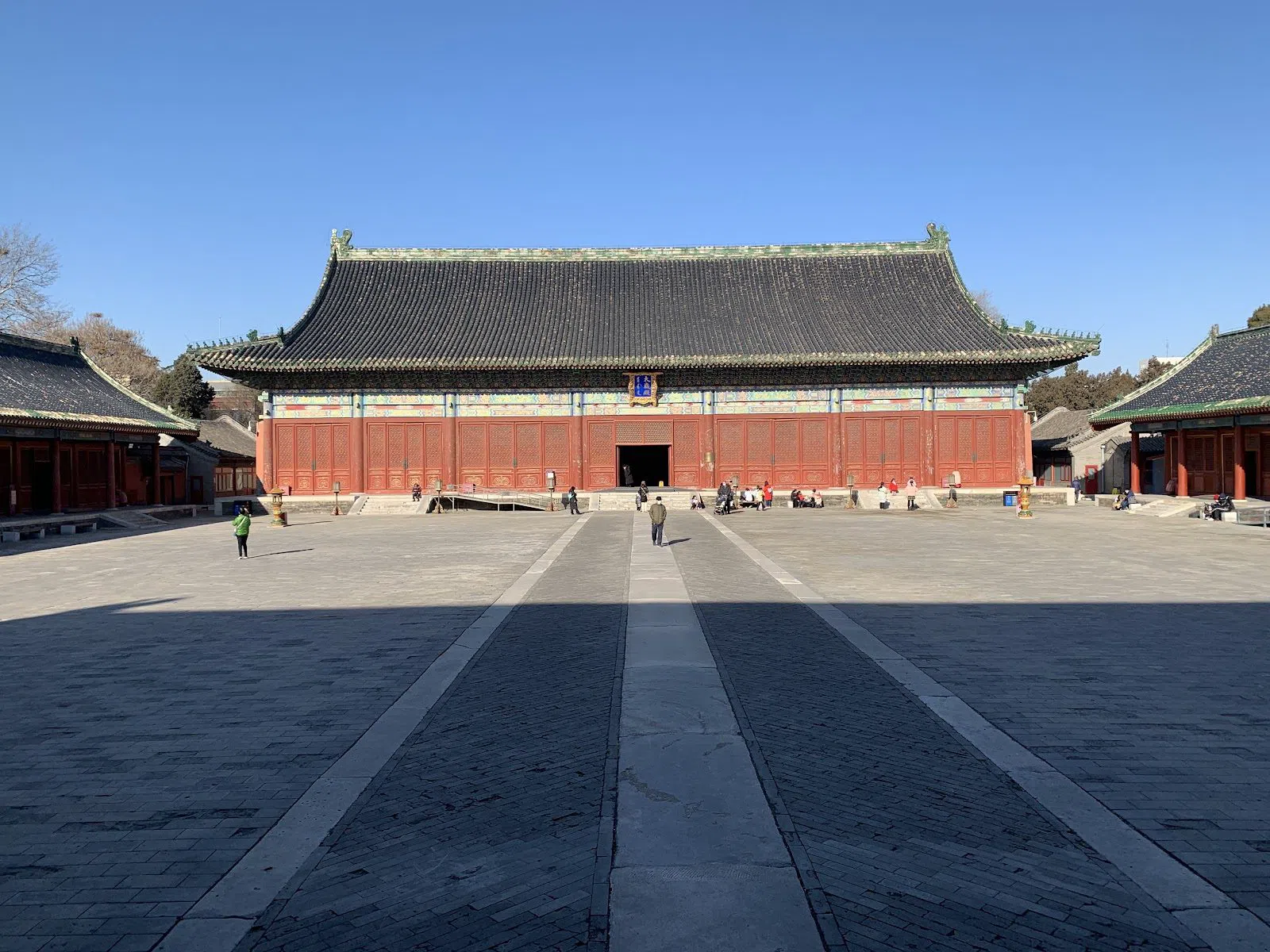
The Beijing Ancient Architecture Museum (Temple of Agriculture, Xiannongtan) is a 10-minute walk west. Taisui Hall's vast timber interior carries a painted coffered ceiling, and the galleries hold scale models of Chinese roof brackets and pagodas, set in an empty walled altar precinct with the emperor's ceremonial ploughing field outside. This is where you work out how the buildings you have just photographed stand up. Entry is ¥15, with an audio guide at ¥10 against a ¥100 deposit. It opens Tuesday to Sunday, 09:00 to 17:00. Wednesday's first 200 visitors go free, which is the only queue the place ever gets.
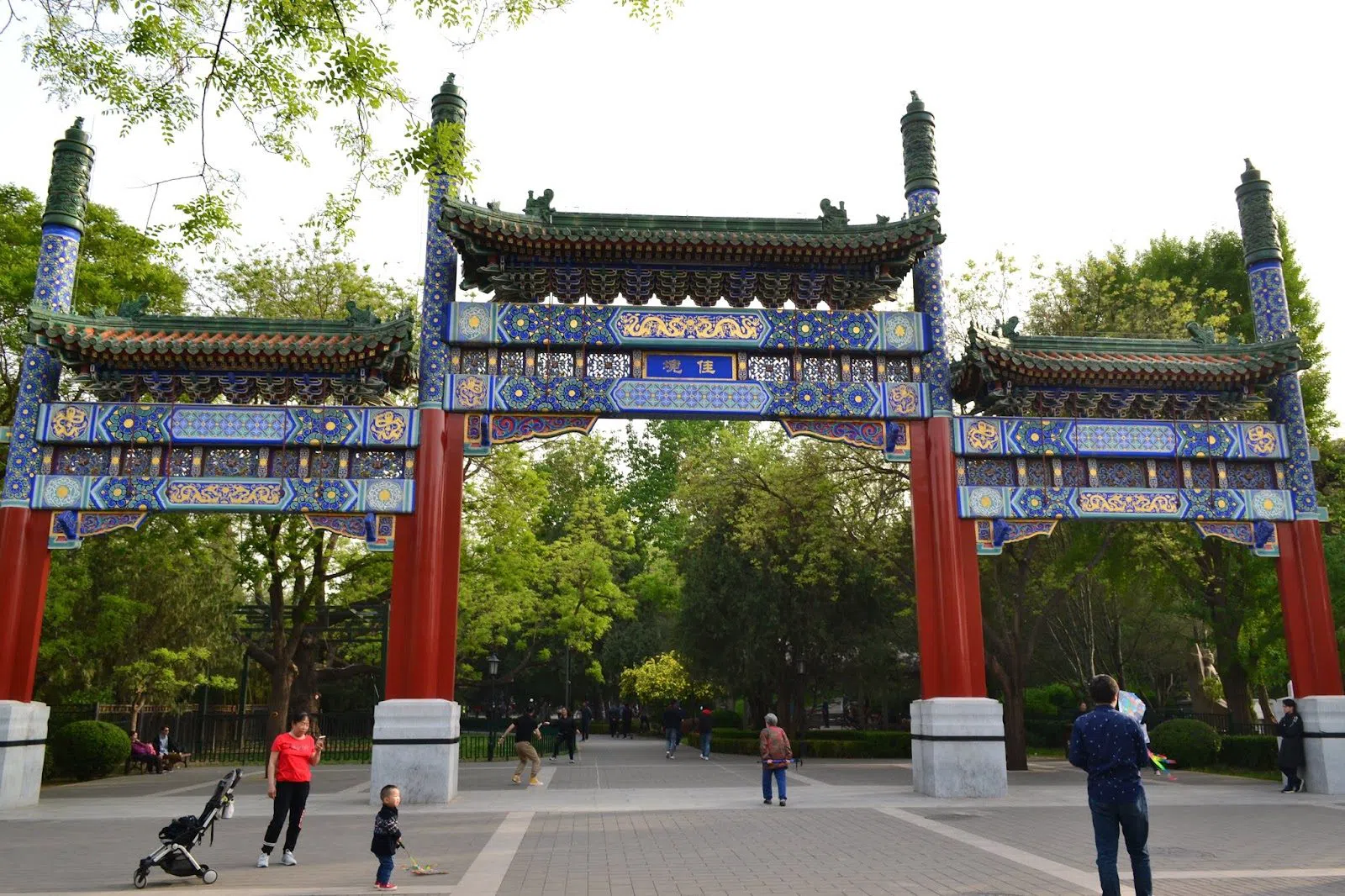
Taoranting Park lies immediately west beyond the Temple of Agriculture. Scaled-down replicas of famous Chinese pavilions stand on knolls around a lake, willows hang over the water, and a hill-top pavilion carries a tiled upswept roof. It is free and unticketed, open 06:00 to 21:30 off-season and 06:00 to 22:00 in summer, and a few interior pavilions need booking. This is the low-cost extension when the altars have closed for the day.
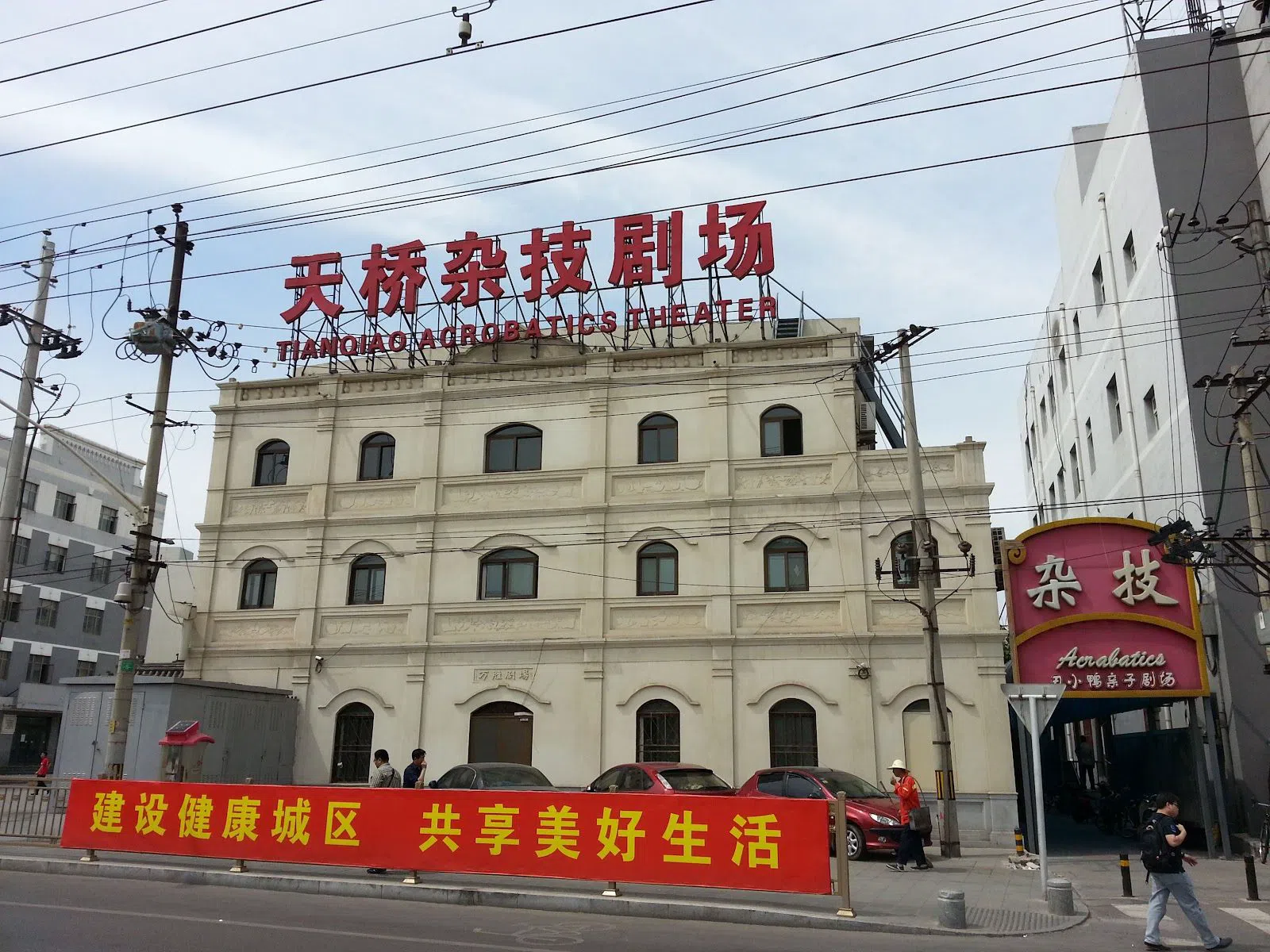
The Beijing Tianqiao Performing Arts Center stands on Tianqiao South Street, 10 minutes from the temple's west side. The complex is low-slung modern grey stone with deep horizontal eaves echoing traditional rooflines, and the glazed foyer lights up at night. The 2026 season runs eight festivals of international and Chinese-language musicals and drama across several auditoria. Tickets are ¥100 to ¥800, and the big imports sell out, so buy ahead.
Is it worth it
It suits a visitor with half a day who wants one long walk with buildings at either end of it. The combination ticket asks little, the halls shut at 17:00, and the one hall people come for is dark on most Mondays.
Practical notes
Plan around Monday: the ticketed halls inside the park, the gate tower, the ancient architecture museum and the natural history museum all close. Reserve the natural history museum slot in advance, buy theatre tickets early, reserve the hotpot flagship, and phone the rooftop terrace before you climb.
See the Beijing guide and the Beijing hotel search.
出发之前
How much does the Temple of Heaven cost to enter?
Park-only entry is ¥10 off-season (1 November to 31 March) and ¥15 in peak season (1 April to 31 October). The combination ticket (lianpiao) is ¥28 off-season and ¥34 in peak, and it adds the Hall of Prayer for Good Harvests, the Circular Mound Altar and Echo Wall, the Hall of Abstinence and the Divine Music Administration museum.
Is the Temple of Heaven open on Mondays?
The park grounds stay open, and they are the only part of the complex you can walk on a Monday. The ticketed halls close, including the Hall of Prayer for Good Harvests, which opens on Mondays that fall on public holidays and opens daily from 15 July to 31 August.
What time should I get there?
At opening. The grounds open at 06:30 off-season and 06:00 in peak season, and nothing else in the park opens before 08:00. Coach groups come through all day, so the first hour is the quiet one.
Can you see the Hall of Prayer from above?
Yes, from Guantan Art Space on the fifth-floor terrace of Hongqiao Market, where the blue triple roof rises above the cypress canopy opposite. Coffee, afternoon tea or a drink costs ¥40 to ¥120 a head. The glass pods seat only a few people each, and you book by phone.
Do I need to book a guided tour, or can I just turn up?
You can walk up to the park and pay at the gate. Guided day tours that include the temple run seven days a week and are selling steadily, so book ahead if you want a particular date.